


Reflections on two days of interactive learning, responsible AI use, effective prompting and youth innovation
Artificial intelligence is becoming part of everyday life. It influences how people search for information, communicate, learn, create content and make decisions. For young people, this presents exciting opportunities, but it also creates an urgent need for practical guidance. Giving learners access to AI tools is not enough; they must also know how to ask useful questions, evaluate the answers they receive, protect their personal information and use technology responsibly.
On 29 July 2026, our AI literacy journey took us to Rwamurunga Community Secondary School. The following day, 30 July 2026, we continued the programme at Nakivale Secondary School. I served as the Ignite AI Bootcamp Facilitator alongside Shiphura Alinda, my Technical Coach and assistant, after we were deployed by Refactory to deliver the training.
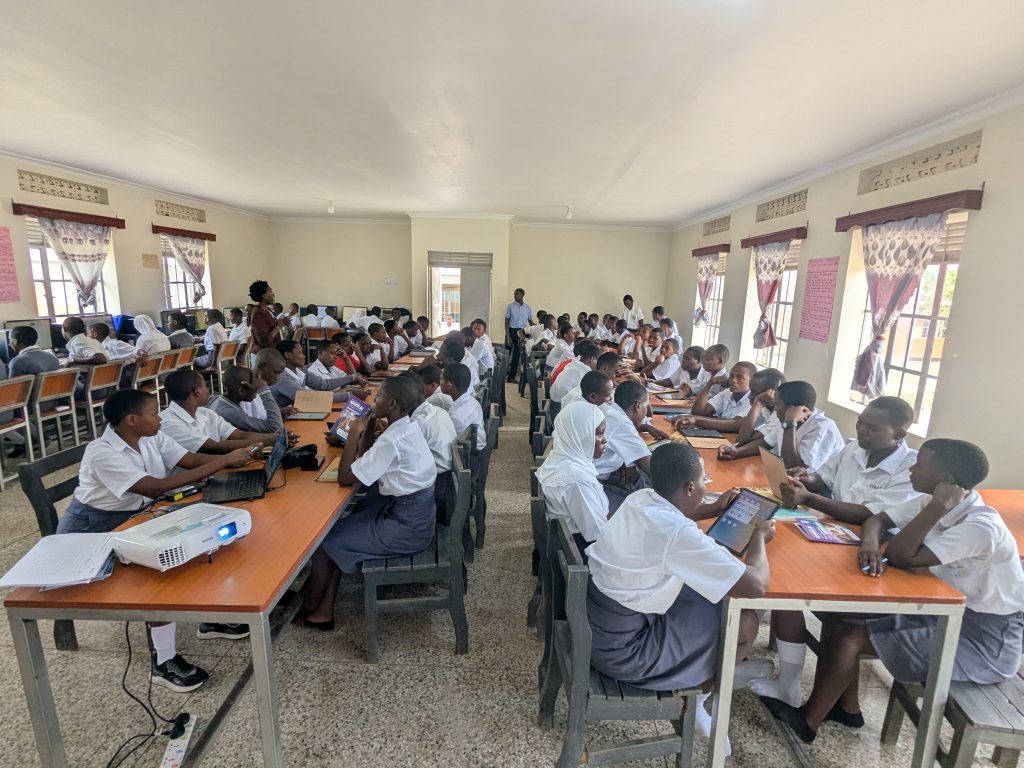
Across the two schools, we reached more than 440 learners. More than 300 learners participated at Rwamurunga Community Secondary School, while more than 140 learners were trained at Nakivale Secondary School. Because of the large numbers, the learners were organised into smaller groups and trained in different shifts. This arrangement enabled us to maintain meaningful interaction, give learners opportunities to participate and provide support during practical activities.
The training was designed to be more than an introduction to popular AI tools. Its broader purpose was to help learners understand what artificial intelligence is, identify where they already encounter it, write effective prompts, recognise its limitations and consider how it can support learning, creativity and community problem-solving.
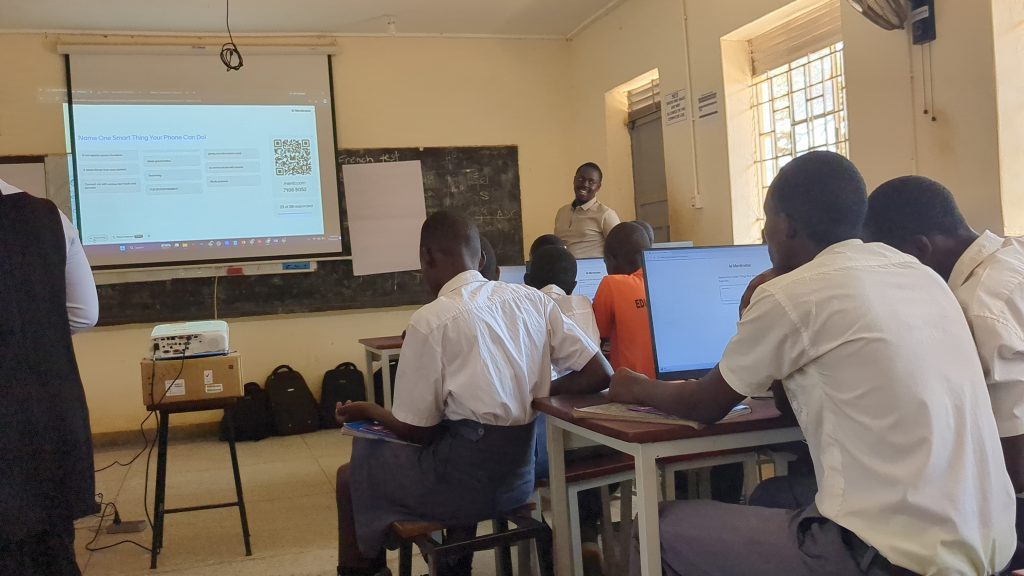
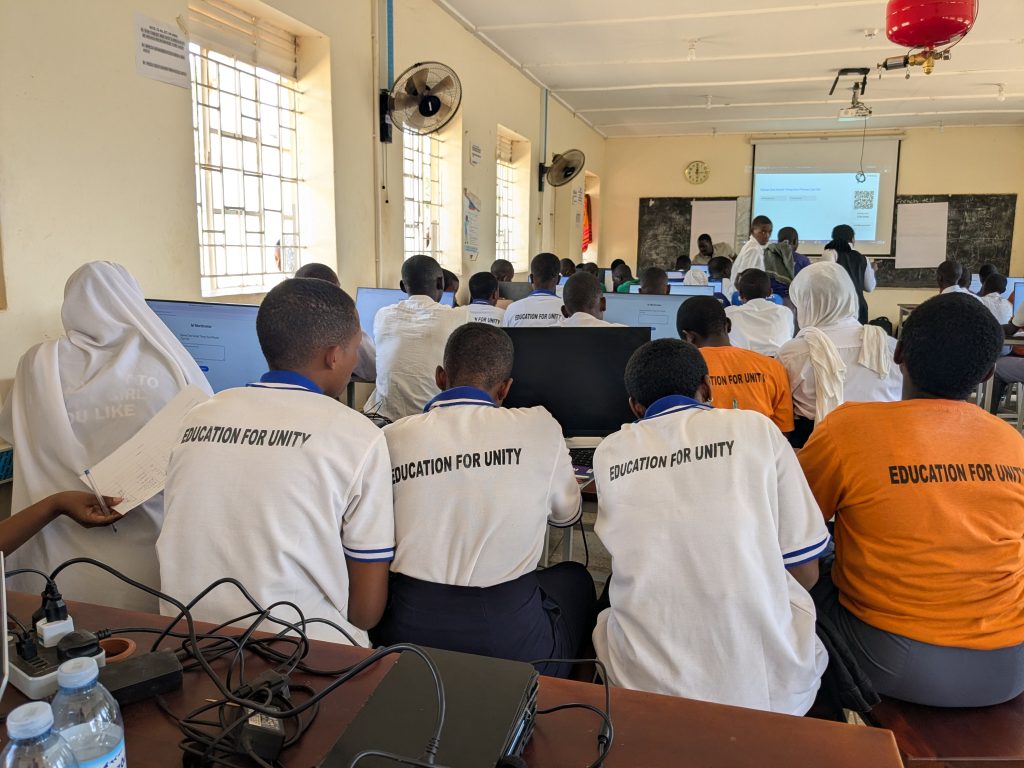
Beginning with the learners’ existing knowledge
Each training shift began with a pre-session quiz. The assessment was not intended to grade or intimidate the learners. It helped us understand what they already knew about AI, which tools they had encountered, how confident they felt and where misconceptions existed.
This was an important starting point because the learners came with different levels of exposure. Some had already used tools such as ChatGPT, Gemini or Claude. Others recognised AI mainly through smartphones, social media recommendations, face recognition or conversations they had heard about robots and automation.
Beginning with what the learners already knew made the training more relevant. Instead of immediately presenting technical definitions, we invited them to think about their daily experiences. We asked them to identify smart functions on their phones and consider whether those functions involved artificial intelligence.
Examples included voice assistants, typing suggestions, face recognition, digital maps, music recommendations, video recommendations and automatic photo enhancement. These familiar examples helped learners understand that AI is not only found in advanced laboratories or science-fiction films. It is already present in many tools and services they use.
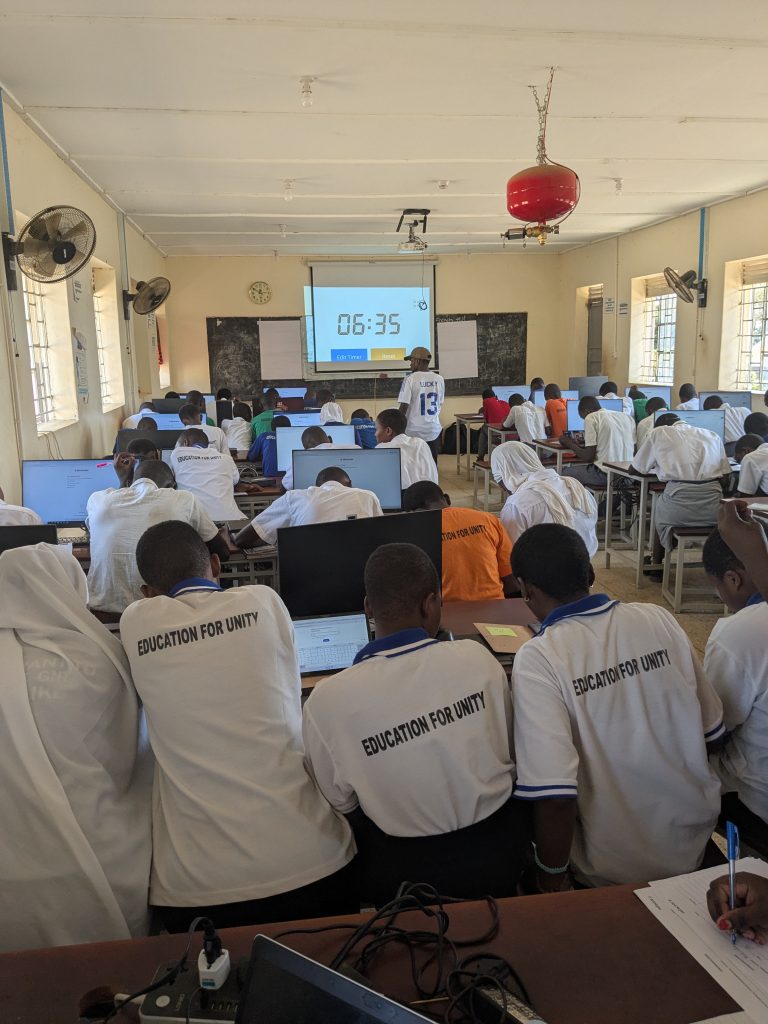
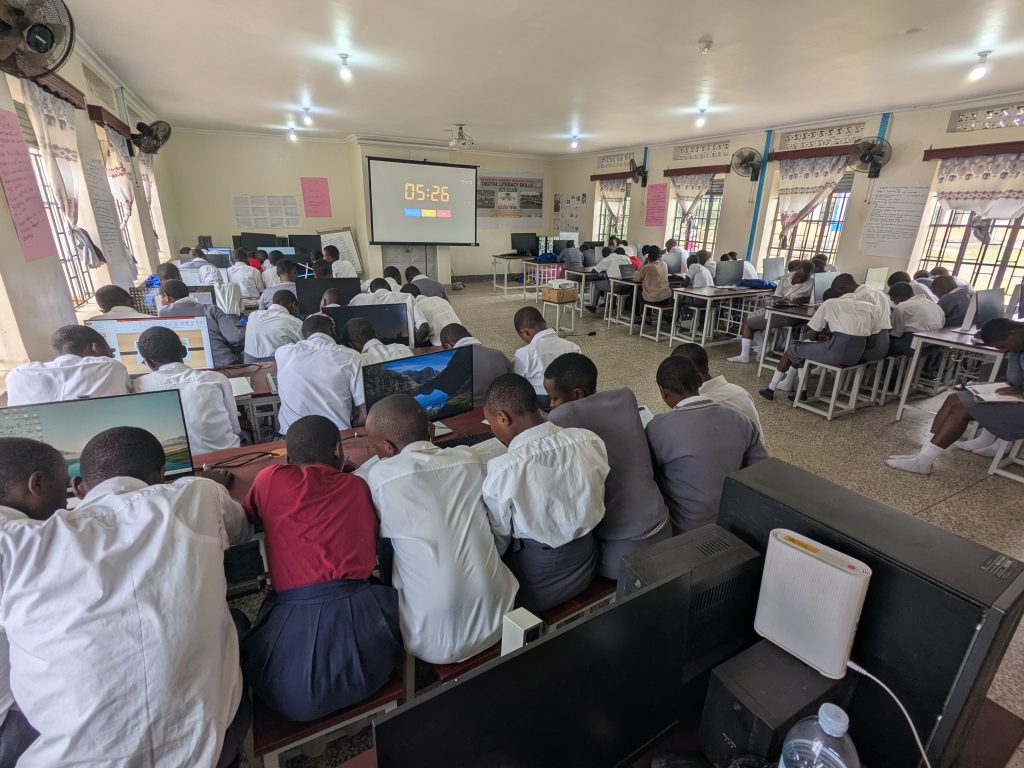
Making the Nakivale session interactive with Mentimeter
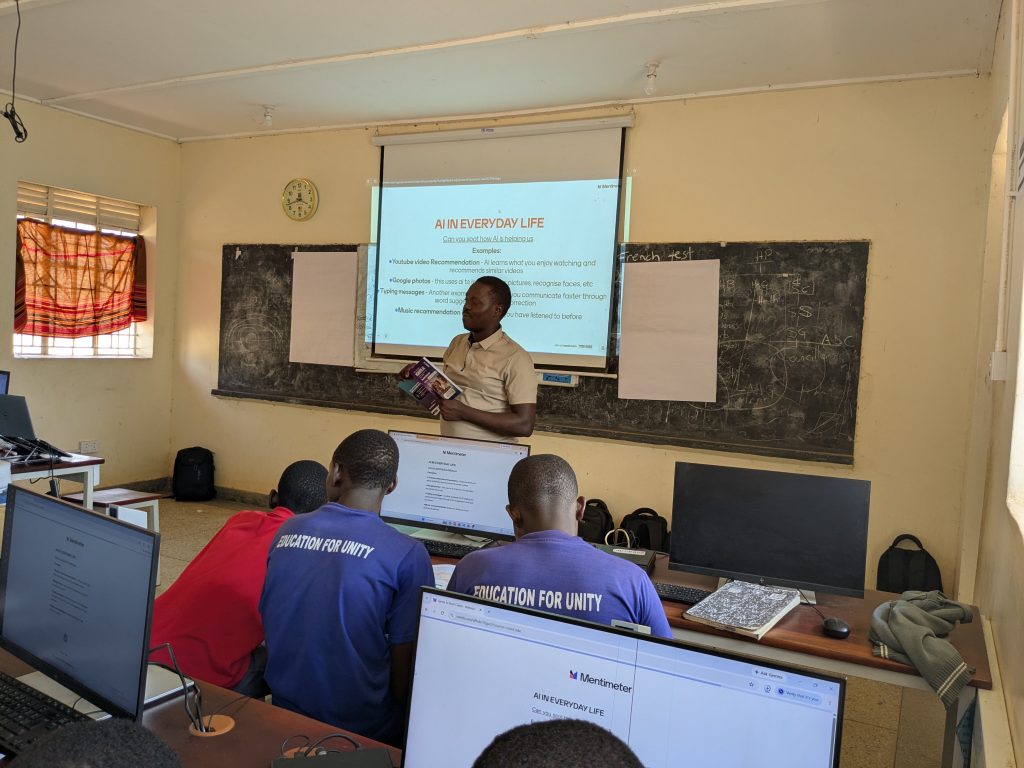
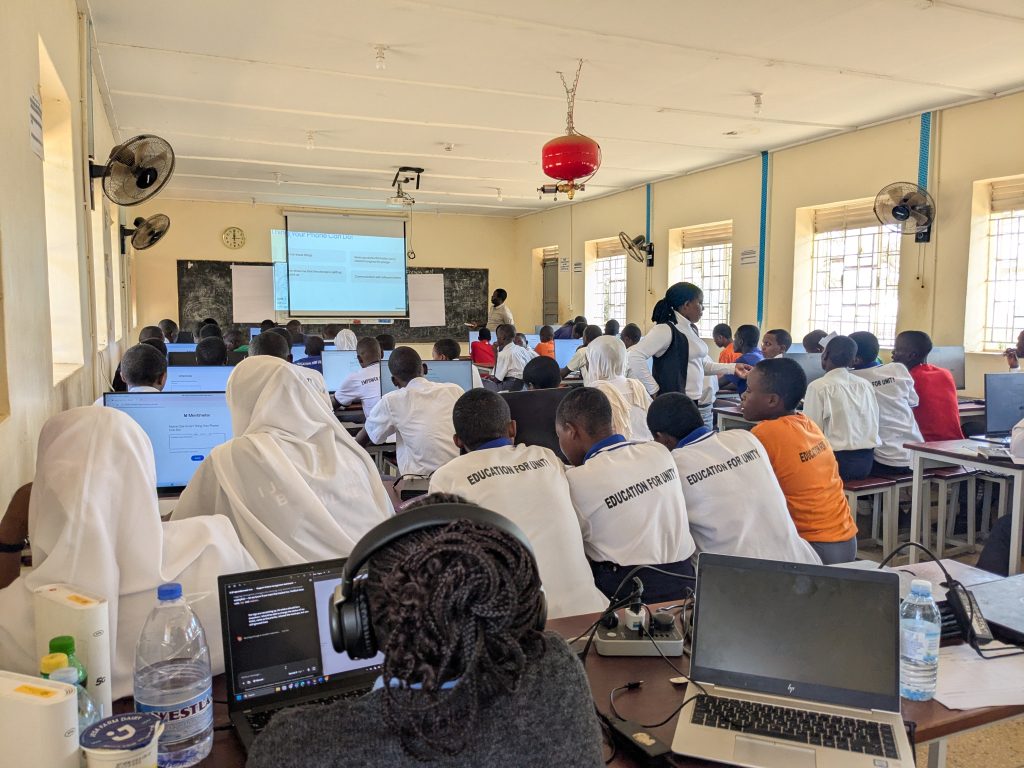
At Nakivale Secondary School, I used Mentimeter to make the learning experience more interactive. Learners responded to questions, participated in polls, contributed short answers and watched their combined responses appear on the screen in real time.
Mentimeter helped transform the session from a presentation into a conversation. It gave learners an opportunity to express their ideas before hearing the facilitator’s explanation. It also allowed us to identify misconceptions immediately and address them through examples and discussion.
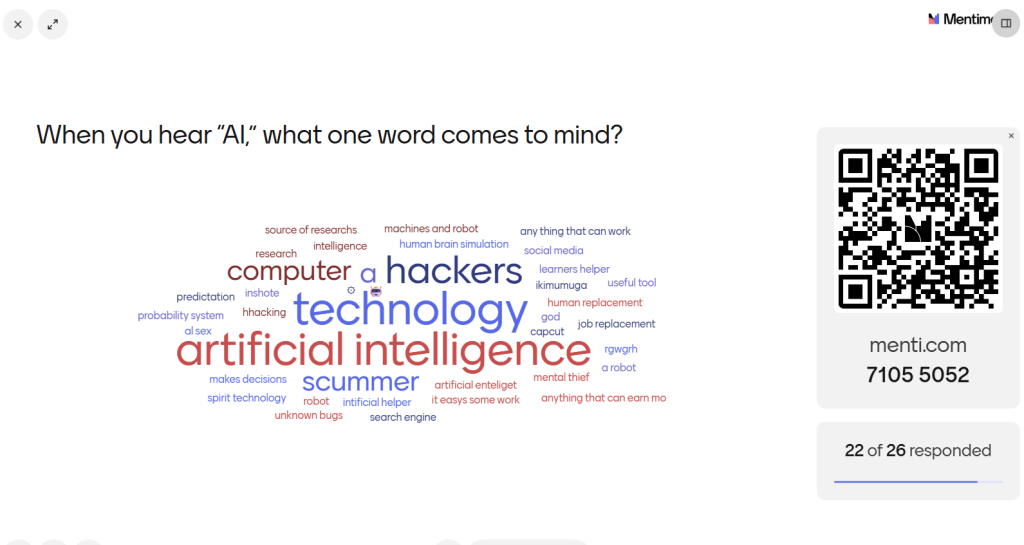
When learners were asked what came to mind when they heard the term “AI,” the word cloud revealed an interesting mixture of awareness, curiosity, uncertainty and concern. Prominent responses included “technology,” “artificial intelligence,” “computer” and “research.” Other learners described AI as a “learners’ helper,” a “useful tool,” something that “makes decisions,” or something connected to robots.
However, some responses associated AI with “hackers,” “scammer,” “human replacement” and “job replacement.” These words revealed genuine fears and misunderstandings. Rather than dismissing them, we used them to guide a meaningful conversation about what AI can and cannot do.
We explained that AI is not automatically helpful or harmful. Its effect depends on how it is designed, the information it uses and the decisions people make when applying it. AI can support education, agriculture, healthcare, communication and innovation, but it can also be used irresponsibly. Human judgement, values and accountability therefore remain essential.
Distinguishing AI from ordinary digital technology
Another Mentimeter activity asked learners to list generative AI tools they had used. Their responses included ChatGPT, Gemini, Claude, DeepAI and Lovable. This showed that some participants had already experimented with generative AI platforms.
Other responses included Google, YouTube, Excel, smartphones and CapCut. While some of these platforms may contain AI-powered features, they are not all generative AI tools by themselves. The responses highlighted an important learning gap: many learners could identify popular digital products, but some were still unsure about the difference between a digital tool, an automated system and an AI system.
We explained that not every electronic device uses artificial intelligence. A standard calculator follows fixed instructions. A basic alarm clock performs a set action at a selected time. An AI system, however, may learn from data, recognise patterns, generate content or make predictions and recommendations.
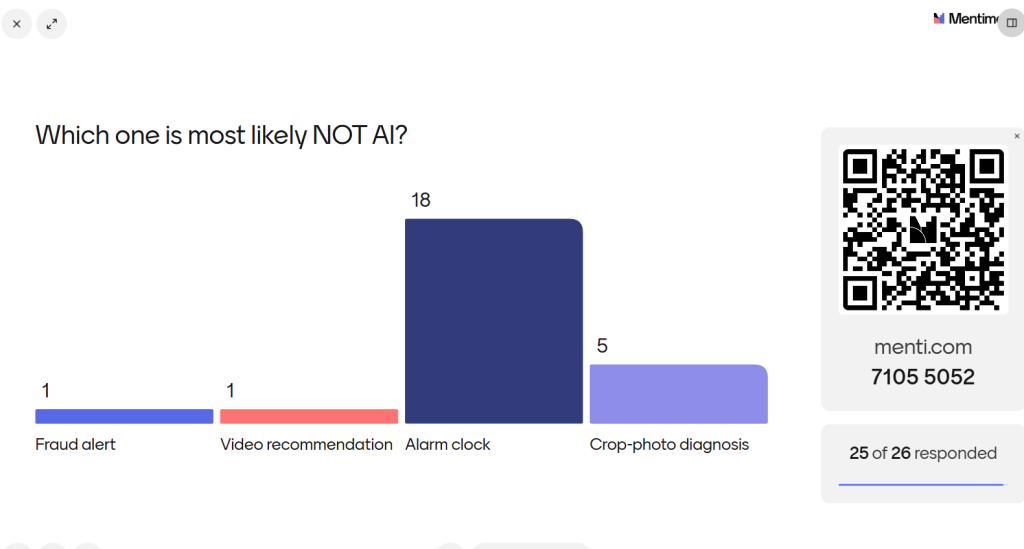
This distinction was tested through another Mentimeter question: “Which one is most likely not AI?” In one response group, 25 paired learners participated. Eighteen pairs correctly selected the alarm clock, while five selected crop-photo diagnosis. One learner selected a fraud alert, and another selected video recommendations.
The responses showed that most learners were beginning to understand the distinction. They also revealed the need for additional examples. A crop-diagnosis system may use AI to examine a photograph and identify signs of plant disease. A fraud-detection system may study unusual transaction patterns. A recommendation system may analyse viewing habits and suggest videos. A basic alarm clock normally follows a fixed rule and does not learn from data.
Discovering how learners were already using AI
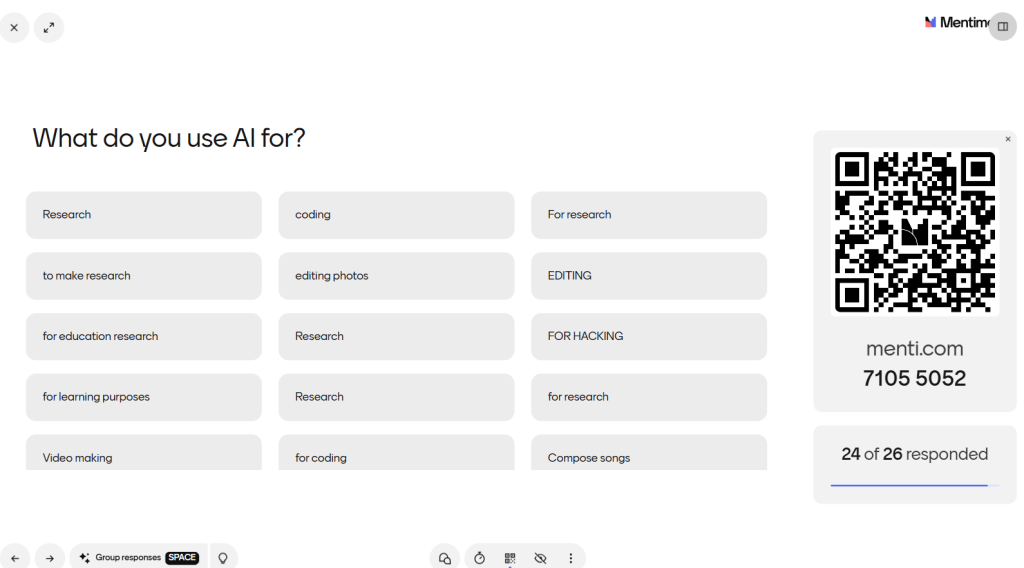
When participants were asked what they used AI for, research appeared repeatedly among their answers. Other responses included coding, editing photographs, creating videos, composing songs and supporting educational activities.
These answers demonstrated that learners were already beginning to see AI as a tool for academic work and creativity. However, one participant mentioned hacking. This became an opportunity to discuss the difference between building digital skills and misusing them.
We reminded learners that technology should be used to learn, create, protect people and solve legitimate problems. It should not be used to access systems without permission, deceive others, spread harmful information or interfere with another person’s privacy.
This observation reinforced an important lesson: AI literacy should not be limited to teaching people how to operate a tool. It must also develop responsibility, honesty, digital citizenship and awareness of consequences.
Suggested media placement:
Confidence does not always mean competence
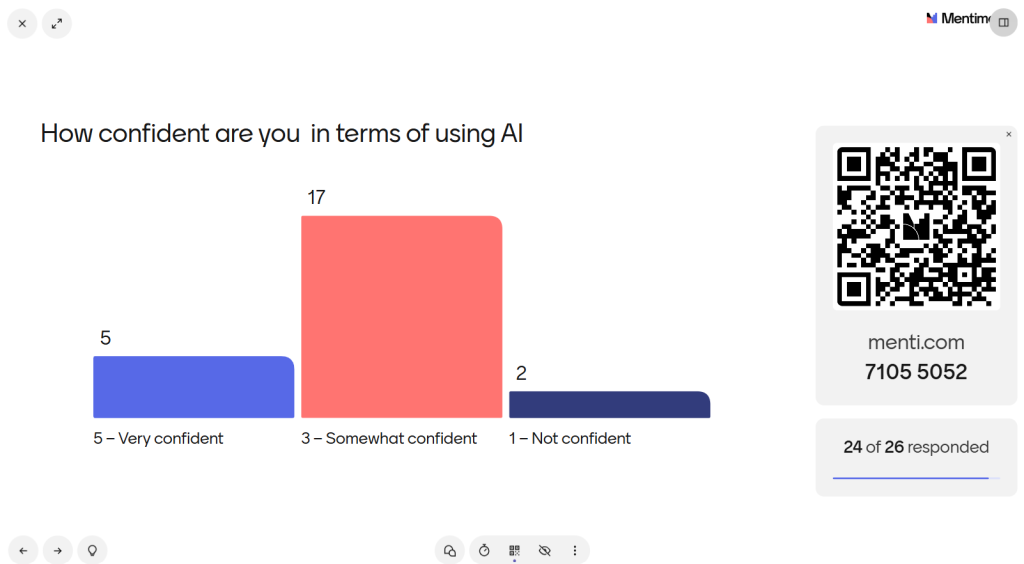
One Mentimeter confidence poll received 24 responses. Five learners described themselves as very confident in using AI, 17 said they were somewhat confident and two said they were not confident.
The result was encouraging because most learners already had some confidence. At the same time, it reminded us that confidence and competence are not always the same. A learner may be comfortable opening an AI tool and entering a question but may not know how to verify the answer, recognise bias, protect personal information or write an effective prompt.
Our responsibility was therefore to help learners move from casual use to informed use. We created an environment in which questions were encouraged and no previous AI experience was required. Learners were allowed to test ideas, make mistakes and improve through discussion and practice.
The objective was not to turn them into AI experts in one day. It was to give them a strong foundation and help them develop habits that would support continued learning.
Learning how to write effective prompts
One of the most important parts of the programme was prompt writing. A prompt is the question or instruction given to an AI tool. We demonstrated that the quality of the response often depends on the clarity of the prompt.
During one Mentimeter activity, learners were asked which of two prompts would produce a more useful farming answer. Four participants selected the broad instruction, “Tell me about farming.” Twenty selected the more detailed prompt:
“For smallholder farmers in our district, suggest three low-cost ways to reduce crop loss. Use simple language and note what should be checked locally.”
The response was encouraging. Most learners recognised that the second prompt would produce a more useful answer because it identified the audience, provided local context, described a particular problem, requested a specific number of ideas and included an instruction to verify information locally.
This activity demonstrated that good prompting is not about using complicated English. It is about knowing what you want and communicating it clearly.
A poor educational prompt might say:
“Teach me algebra.”
This request is too broad. The AI does not know the learner’s class, the exact topic, the difficulty being experienced or the type of assistance required.
A better prompt would be:
“I am a Senior Two learner who is struggling with linear equations. Explain how to solve them using simple English. Show one example at a time, and then give me three practice questions. Do not provide the answers until I have attempted them.”
The improved prompt identifies the learner’s level, the topic, the challenge and the preferred learning process. Instead of merely asking for an answer, it asks the AI to support learning.
Suggested media placement: Insert the Mentimeter farming-prompt comparison.
Suggested caption: Twenty of the 24 respondents selected the detailed farming prompt, demonstrating an understanding of why context and clear instructions matter.
A practical framework for better prompts
During the practical exercises, we introduced a simple framework that learners could remember and apply.
A useful prompt should begin with a clear goal. The learner should state whether the AI should explain, create, compare, summarise, review, translate or generate practice questions.
The prompt should then identify the audience. An explanation prepared for a Senior One learner will differ from one written for a Senior Six learner, an educator, a parent or a farmer.
The learner should provide sufficient details. These may include the subject, topic, local context, examples, length, tone or desired learning outcome.
Finally, the prompt should include relevant constraints. The learner may ask the AI to use simple English, avoid difficult terminology, keep the response below a particular length or provide hints instead of final answers.
For example, a learner interested in solving a school problem could write:
“Help a group of secondary-school learners identify three low-cost ways of reducing plastic waste at school. Use examples that are practical in a Ugandan school. Present the answer in a table showing the materials required, expected benefits and possible challenges. Keep the response below 300 words and identify what we should confirm with the school administration.”
This prompt gives the AI enough information to produce a focused response. It also reminds the learner that suggestions generated by AI should be discussed and verified before implementation.
Learning by doing
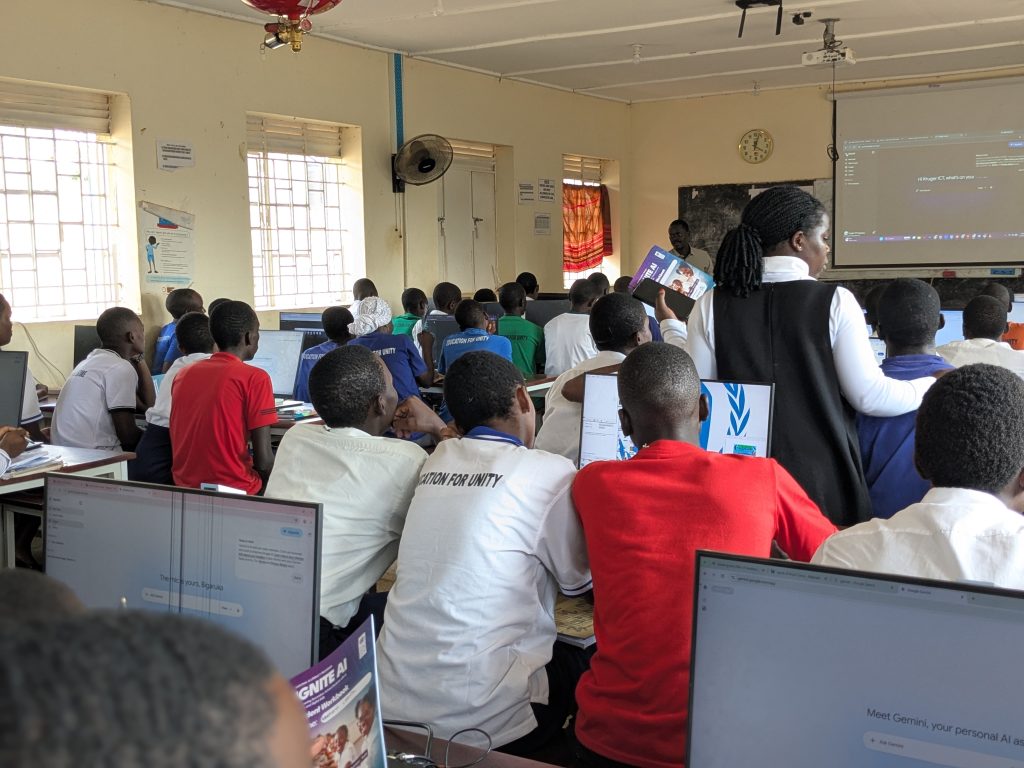
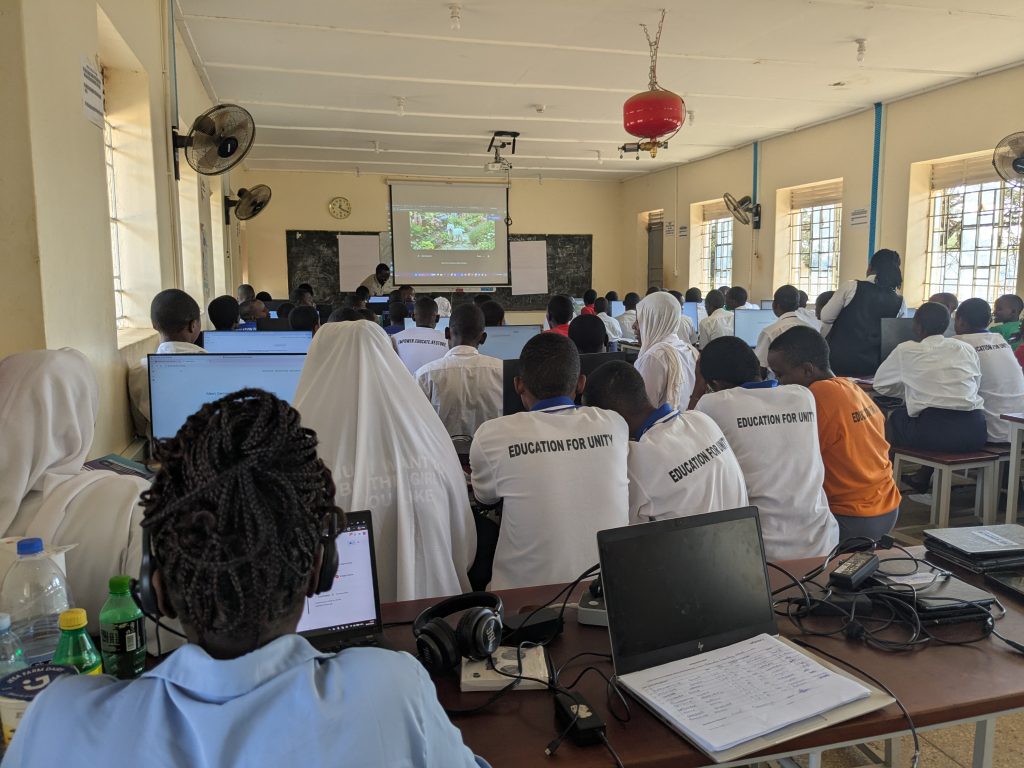
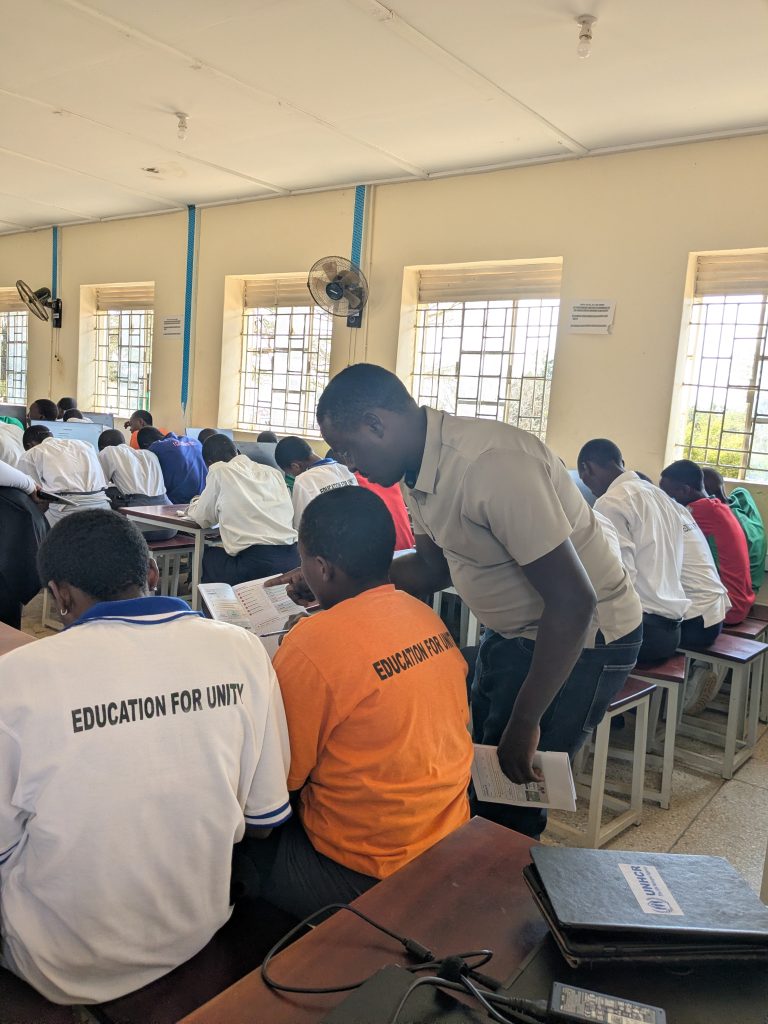
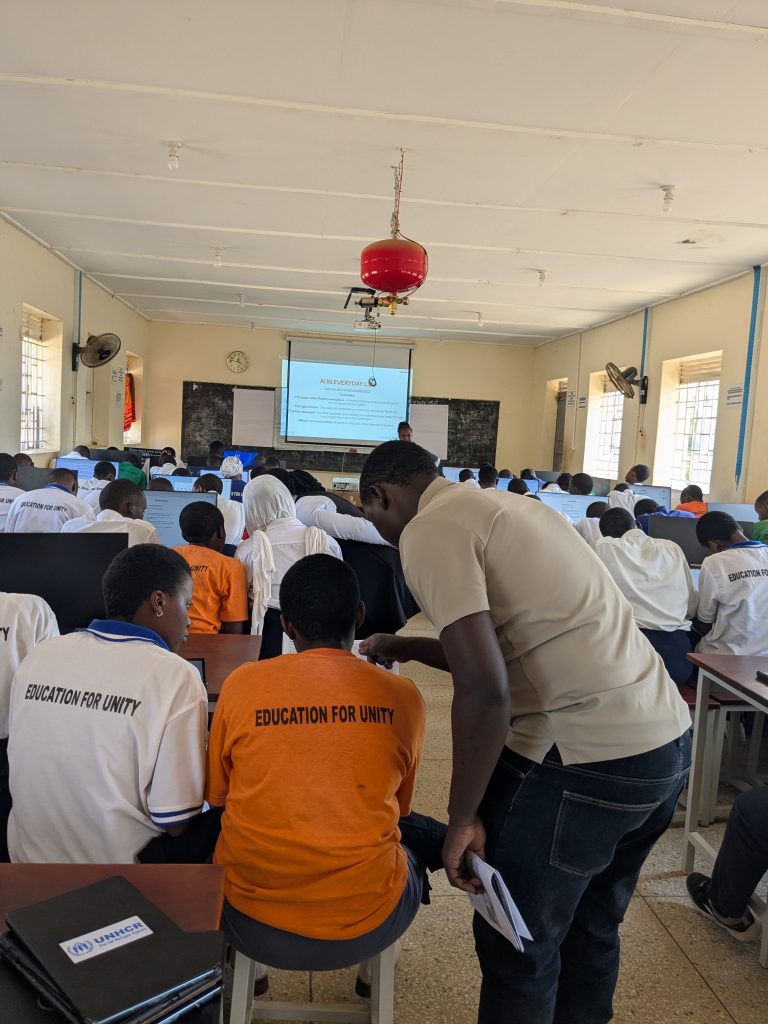
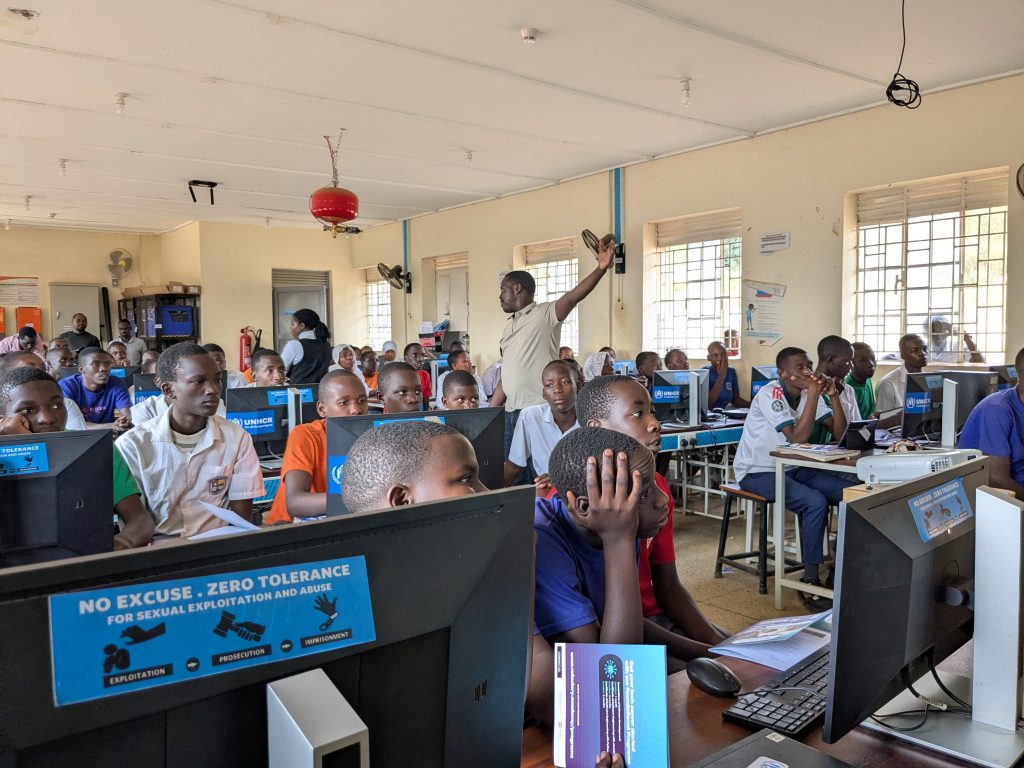
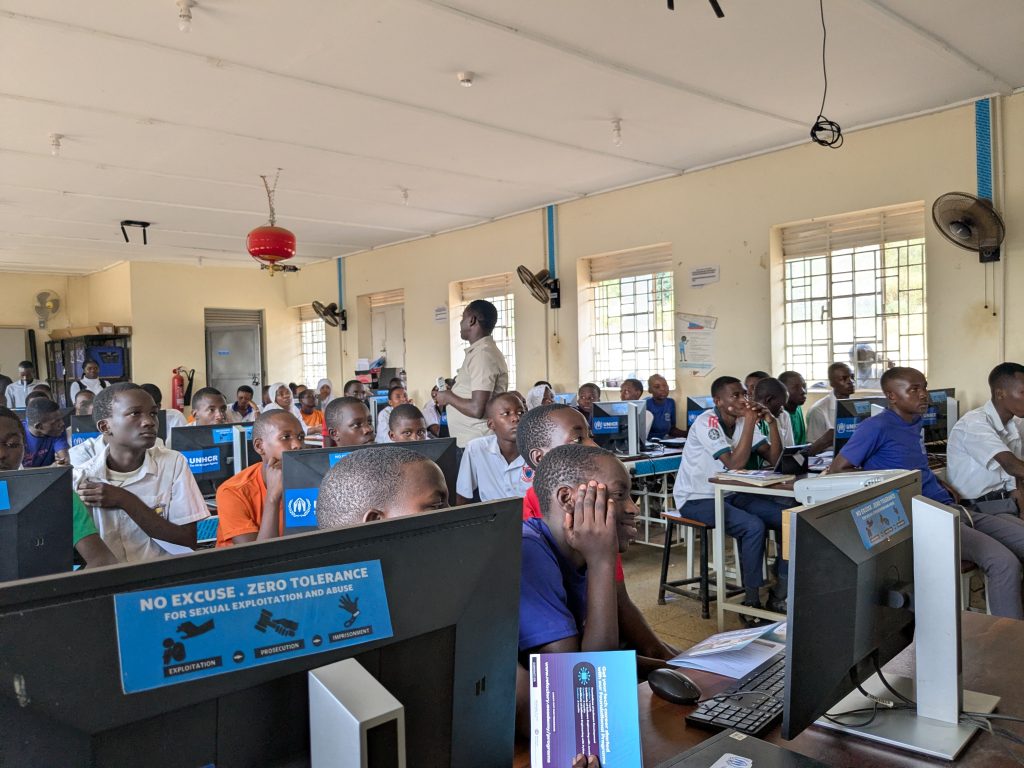
The sessions at Rwamurunga and Nakivale were deliberately practical. Learners did not spend the entire day listening to definitions. They participated in discussions, prompt-writing demonstrations, quizzes, voting exercises, group activities and presentations.
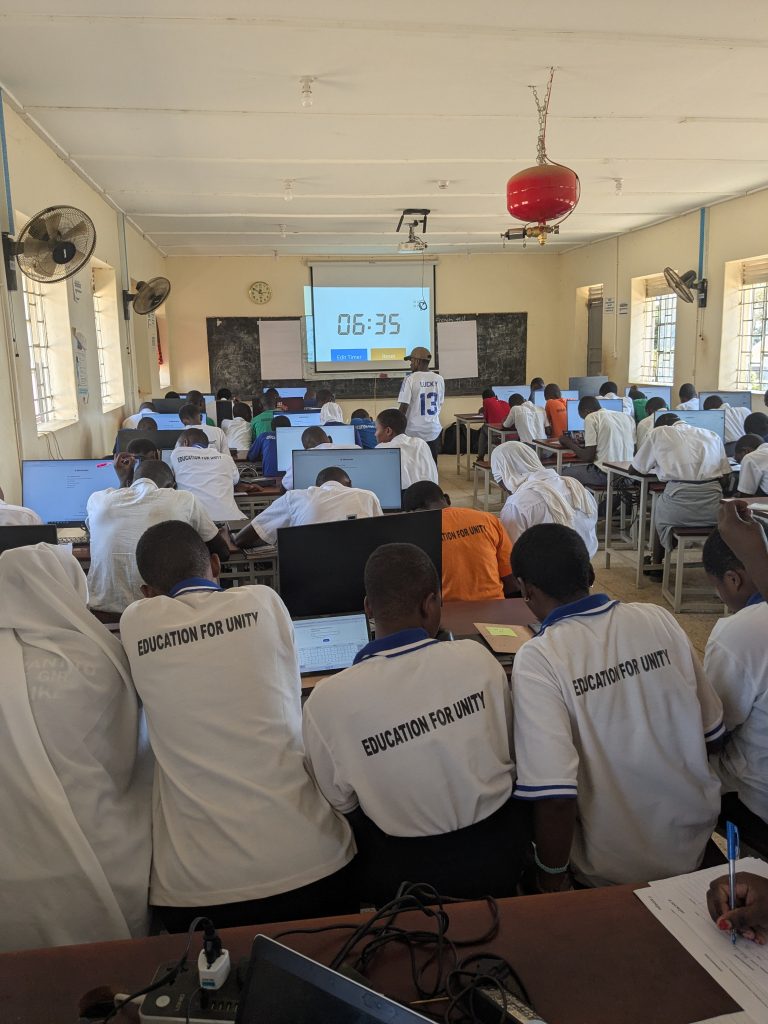
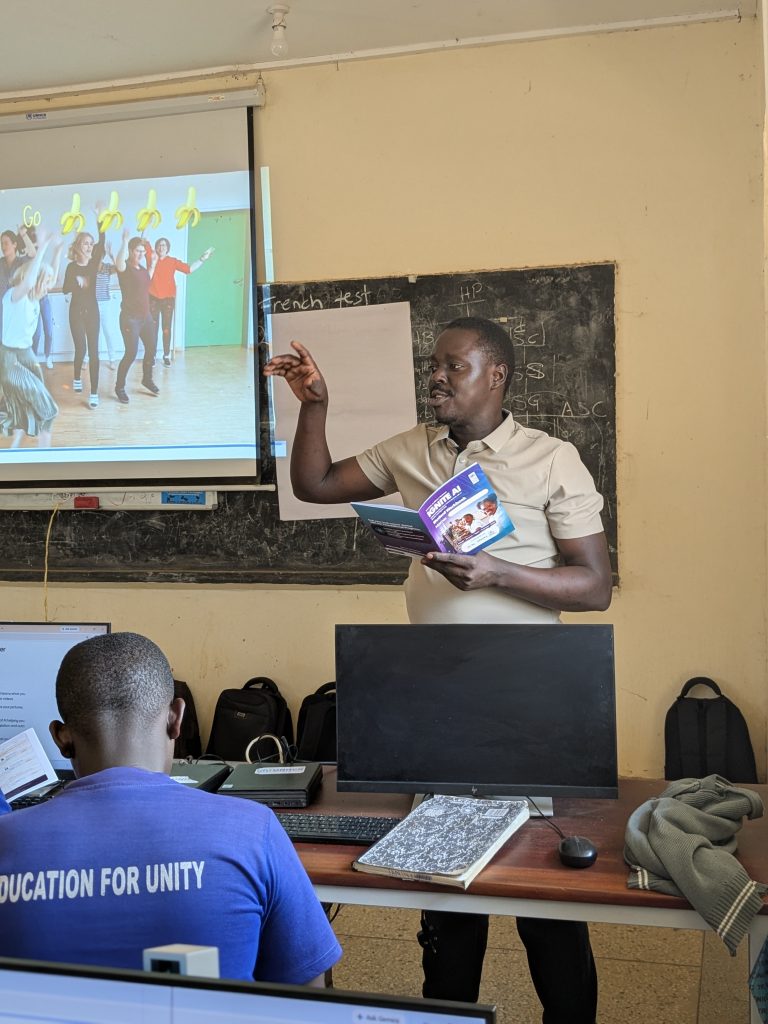
At Nakivale Secondary School, learners worked at computers as they followed live demonstrations and experimented with different prompts. This practical setting allowed them to observe how small changes in an instruction could produce noticeably different results.
The Ignite AI study materials supported the sessions and gave learners a reference they could continue using after the training. The materials covered AI fundamentals, everyday applications, generative AI, effective prompting, privacy, fairness, careers and the use of AI to solve local problems.
One of the most satisfying observations was the learners’ willingness to participate. They asked questions, challenged ideas and connected the training to situations they understood. Examples related to farming, schoolwork, smartphones and community challenges made the concepts more meaningful.
Group presentations and community problem-solving
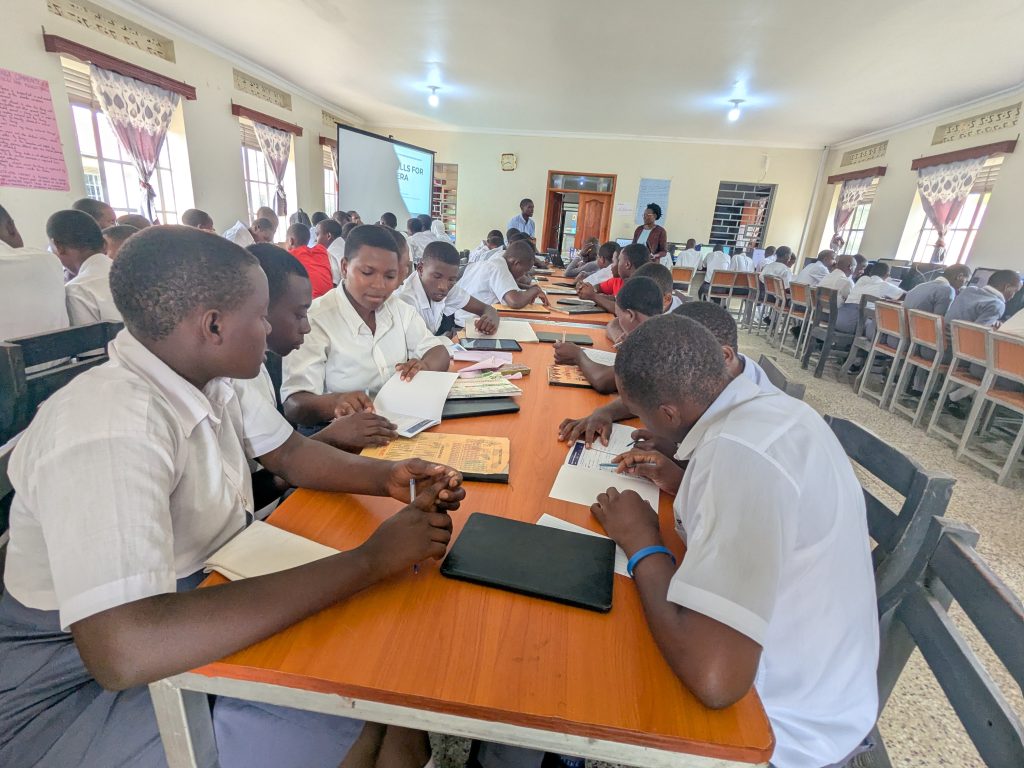
After exploring the learning content, participants worked in groups and presented their ideas. Group presentations allowed learners to organise what they had understood, communicate confidently and listen to different viewpoints.
The activity also reflected an important reality about innovation: meaningful solutions are rarely developed by one person working alone. Learners had to collaborate, agree on priorities and explain their thinking to others.
They were encouraged to identify challenges affecting their schools or communities and consider how AI might assist. Possible areas included agriculture, waste management, water conservation, revision support, health awareness and communication.
We emphasised that AI should not be viewed as a magical solution. A successful project must begin with understanding the real problem and listening to the people affected by it. AI may help learners research, brainstorm and compare possible approaches, but people must still evaluate the ideas and make decisions.





Ending each shift with a Kahoot challenge
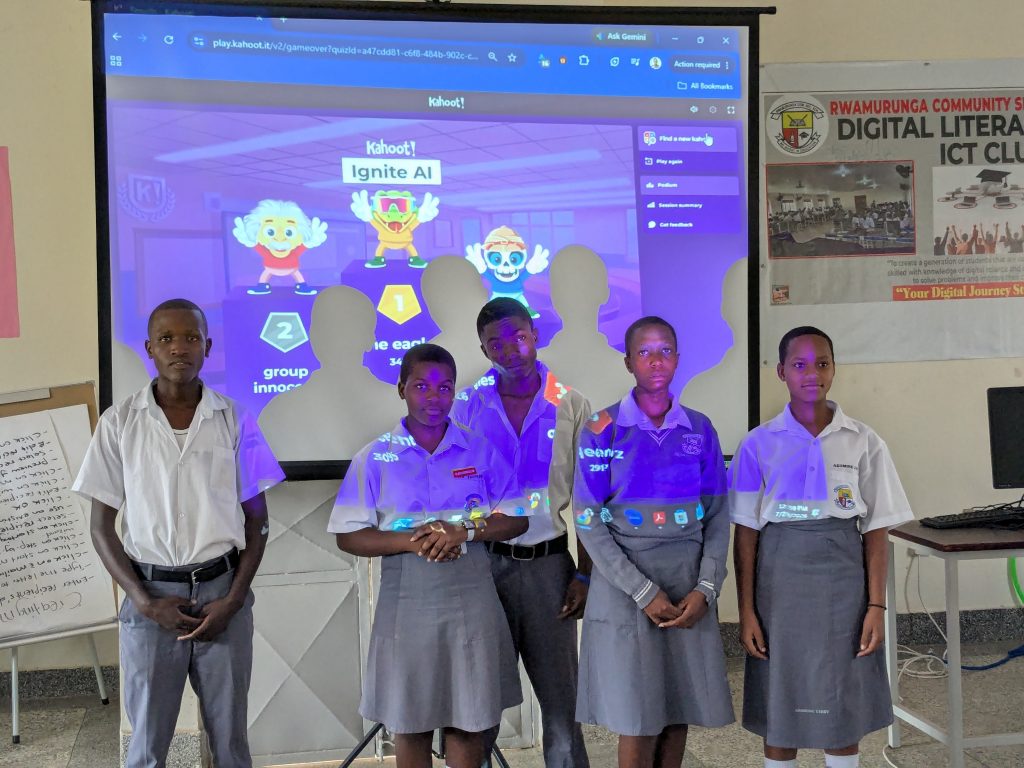
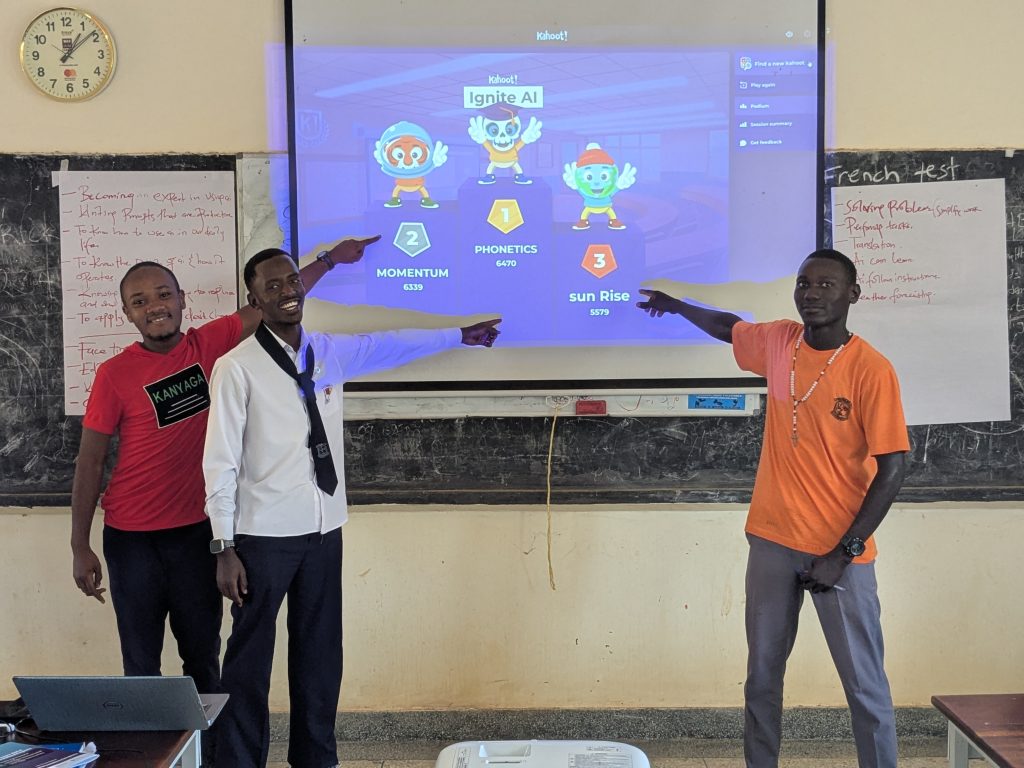
We concluded the learning experience with a Kahoot quiz. Learners were divided into groups and competed as teams. This created a lively atmosphere while helping us review the major lessons from the day.
The questions covered the meaning of AI, examples from everyday life, effective prompting, privacy, responsible use and the importance of verifying information. Team members had to discuss the possible answers and agree before submitting their choice.
This made Kahoot more than an entertaining conclusion. It encouraged communication, teamwork, decision-making and recall. The friendly competition also gave learners an opportunity to celebrate what they had learned.
At both schools, we recognised the three highest-performing groups. Photographs of the top teams captured their excitement and provided a memorable conclusion to the training shifts.
Using post-assessments to reinforce learning
After the practical activities and group presentations, learners completed a post-training quiz. The post-assessment allowed them to revisit key ideas and reflect on what had changed in their understanding.
The learning sequence was intentional. We began with a pre-assessment, introduced concepts through interactive teaching, supported learners during practical exercises, created space for group presentations and concluded with a post-assessment and Kahoot challenge.
This approach gave us several opportunities to observe learning. It also allowed learners who were less comfortable speaking in front of the class to participate through quizzes, group responses and digital activities.
The purpose of the assessments was not simply to produce scores. They were part of the teaching process. Each question created an opportunity to correct a misconception, explain a difficult concept or encourage deeper reflection.
Listening to the learners’ testimonies
During the school visits, I recorded short testimony videos in which learners shared their experiences and expressed appreciation for the programme. These testimonies are a valuable part of the story because they allow participants to describe the training in their own words.
Some learners spoke about the new knowledge they had gained, while others reflected on how they planned to use AI in their studies, research, creative work or community projects. Their comments showed that the training was not merely introducing a new technology. It was also encouraging curiosity and building confidence.
Where appropriate consent has been obtained, sharing these videos can help educators, parents and development partners understand the value of structured AI literacy training.
Celebrating participation and achievement
At Rwamurunga Community Secondary School, learners gathered with their certificates to celebrate the completion of the programme. The certificates represented more than attendance. They recognised the learners’ willingness to participate, explore unfamiliar ideas and begin developing skills for the AI era.
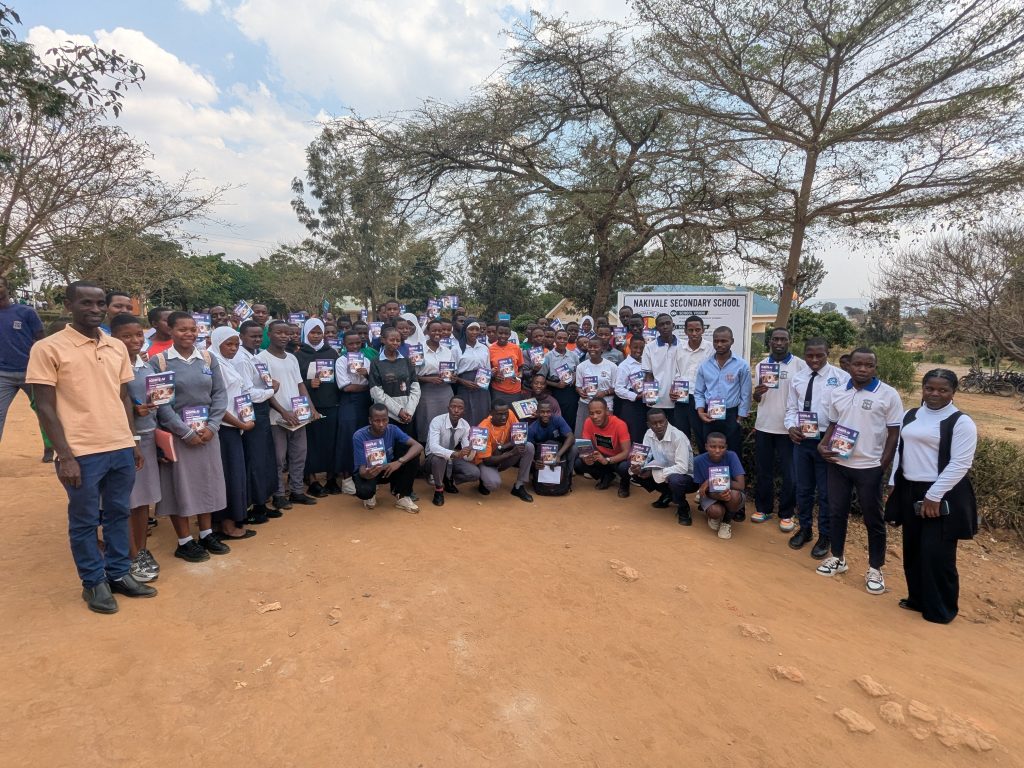
We also captured photographs of learners holding their Ignite AI study materials alongside teachers. These materials provide a valuable connection between the facilitated sessions and continued learning at school.
The participation of teachers is especially important. Sustainable AI literacy cannot depend on occasional training visits alone. Learners need educators who can continue guiding them, connect AI skills to classroom subjects and encourage responsible experimentation.





Responsible AI use must remain central
AI can help learners research topics, understand difficult concepts, practise questions, develop ideas and improve their writing. However, it can also produce incorrect, outdated or misleading information.
Learners were reminded not to trust every answer simply because it sounded confident. Important information should be checked against textbooks, teachers, official websites and other reliable sources.
They were also encouraged not to copy AI-generated answers without reading or understanding them. A learner who submits work they cannot explain may complete an assignment but lose the opportunity to learn.
Privacy was another major area of discussion. Learners should never enter passwords, home addresses, telephone numbers, private photographs, health information or confidential school records into unfamiliar AI applications. When an application requests personal information, they should first ask why that information is needed and whether the service can be trusted.
We also discussed fairness and bias. AI systems learn from data, and that data may contain unfair patterns. As a result, AI can produce biased recommendations or repeat stereotypes. Human beings must review AI-supported decisions and ensure that people are treated fairly.
The central message was simple: AI can assist people, but it should not replace human responsibility. Curiosity, creativity, care and judgement will remain important in every career.
Preparing learners to become innovators
The purpose of Ignite AI is not simply to teach learners the names of popular tools. It is to help young people become thoughtful users, problem-solvers and innovators.
A learner may use AI to investigate ways of reducing crop losses, improving sanitation, conserving water, supporting revision or communicating health information. AI can assist by suggesting ideas, comparing options and organising a project plan.
However, technology alone does not create meaningful innovation. Learners must first observe the problem, speak to the people affected and understand the local environment. They must then test their ideas and improve them using feedback.
The strongest solutions combine technology with human understanding. AI may provide suggestions, but learners must decide whether those suggestions are practical, affordable, ethical and appropriate for their communities.
The visits to Rwamurunga and Nakivale reminded us that young people are ready to engage with emerging technologies. When concepts are presented through familiar examples and practical activities, learners do not remain passive listeners. They begin asking how technology can help them create something valuable.
Appreciation to Refactory and UNDP
I extend my sincere appreciation to Refactory for entrusting us with the responsibility of facilitating these important learning experiences. Serving as the Bootcamp Facilitator alongside Technical Coach Shiphura Alinda gave us an opportunity to contribute directly to the development of young people’s AI literacy, critical-thinking and innovation skills. Refactory’s commitment to practical technology education is helping learners access knowledge that can influence their education, careers and communities.
I also extend a special vote of thanks to the United Nations Development Programme in Uganda for supporting the National AI Literacy Programme. This support is extending opportunities to learners from different communities and helping young people prepare for a future in which digital skills will be increasingly important. We appreciate UNDP’s continued commitment to inclusive learning, responsible innovation and youth empowerment.
I am equally grateful to the administrators, ICT teachers, educators and learners of Rwamurunga Community Secondary School and Nakivale Secondary School. Their hospitality, cooperation and active participation made the two training days meaningful and memorable.
Continuing the AI literacy journey
Reaching more than 440 learners across two schools was an important achievement, but it should be viewed as part of a much larger journey. Learners need continued access to practical training, responsible guidance and opportunities to apply AI to real school and community challenges.
The question is no longer whether young people will encounter artificial intelligence. They already do. The more important question is whether they will have the knowledge, values and confidence required to use it effectively.
By introducing AI through practical examples, interactive assessments, effective prompting, collaborative challenges and responsible-use discussions, we can help learners move from being passive consumers of technology to becoming thoughtful creators and innovators.
Schools, training institutions, youth organisations, community groups, development partners, businesses and other organisations interested in equipping their learners, educators or teams with practical AI skills are invited to hire and engage us for customised AI literacy training. Our sessions can cover AI fundamentals, effective prompt writing, responsible and ethical AI use, AI for education, workplace productivity, digital content creation, problem-solving and innovation. Let us work together to prepare more people to use artificial intelligence confidently, safely and productively in their schools, workplaces and communities.



(3) Comments
My name is Pendo Gidion a student at Nakivale secondary school in S3.
I really thank refactory team not forgetting UNDP for the training you gave to us. It was so amazing when we reached on that session if Kahoot. I was really impressed with training. I would wish that if possible by next term you come back and give us more training like dealing with data science, Java scripts and how to make a website.
Thank you so much I appreciate.
It’s so nice
Wish God to protect you until we meet again in other applications if God wishes