Realistic Solutions for a More Connected, Equitable Future in Education
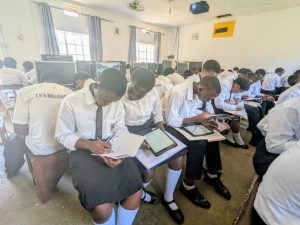
The digital divide in education isn’t just a buzzword—it’s a reality in many Ugandan schools. While some students are using laptops and learning to code, others still struggle to access a single functional computer. In many schools, teachers and learners alike lack the tools, skills, and infrastructure to fully participate in the digital age.
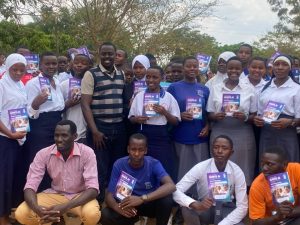
As an ICT teacher, EduTech facilitator, and developer, I’ve worked directly with schools across different regions of Uganda. I’ve seen the gaps—but I’ve also seen the potential. The question isn’t whether we can bridge the digital gap. It’s how we can do it—together.
🕳️ What Is the Digital Gap?
The digital gap refers to the unequal access to technology and digital skills between different schools, communities, or individuals. In Uganda, this often shows up as:
- Lack of devices (computers, tablets, projectors)
- Poor or no internet access
- Untrained teachers in ICT integration
- Limited digital content aligned with the curriculum
- High cost of digital tools and data
This gap doesn’t just affect students academically—it limits future opportunities in jobs, innovation, and global citizenship.
So, How Can We Bridge It?
Here are some realistic, locally grounded solutions I believe can make a big difference:
1. Start with Teacher Empowerment
No matter how much tech you provide, change begins with the teacher. We need to:
- Train teachers in basic and intermediate ICT skills
- Encourage the integration of tech in all subjects
- Create mentorship networks and peer-learning groups
In my workshops, I’ve seen teachers go from tech-shy to tech-confident with just a few guided sessions.

2. Leverage Low-Cost, Offline-Friendly Tools
Not every solution needs high-speed internet or expensive devices. Schools can use:
- RACHEL servers (offline digital libraries)
- Kolibri by Learning Equality
- Offline versions of Khan Academy or Wikipedia
- Smartphones or feature phones for mobile learning
- Open Educational Resources (OERs)
Let’s focus on what’s available and sustainable, not just what’s ideal.
3. Encourage Community and School Partnerships
Bridging the digital gap is not the responsibility of schools alone. We need:
- Partnerships with local businesses and NGOs
- Alumni donations or support from parent-teacher associations
- Tech companies offering equipment, training, or mentorship
- Local governments budgeting for ICT at the school level
One laptop donated, one training offered, one school connected—it all adds up.
4. Promote Student-Centered ICT Clubs
ICT clubs give students the space to:
- Experiment with devices
- Learn coding, typing, and digital design
- Peer-teach each other
- Solve local problems with tech
These clubs can operate even with minimal resources, and often lead to passion-driven innovation.
5. Incorporate ICT Across the Curriculum
ICT shouldn’t be siloed—it should be a tool in every classroom:
- Science teachers using YouTube simulations
- English teachers using Google Docs
- Math teachers using Excel for calculations
- Geography teachers using Google Earth or digital maps
Cross-curricular tech use builds relevance and confidence for both learners and teachers.
6. Make Policy and Budgeting Support a Priority
Governments and education authorities must:
- Prioritize ICT in education budgets
- Provide tax relief or subsidies for school tech purchases
- Encourage ICT inclusion in national assessments
- Monitor and support implementation of digital literacy standards
Policy without practice is empty. But with the right push, ICT can become a true pillar of education in Uganda.
`
🛠️ What I’m Doing to Help
As Ticha Denis Kruger, I:
- Train teachers through workshops and seminars
- Share free lessons, notes, and tutorials on my YouTube channel
- Build school websites and digital portfolios
- Provide templates, schemes of work, and starter kits for ICT teaching
- Advocate for inclusive tech use in rural schools
You can do your part too—start small, and build from there.
✨ Final Thoughts
Bridging the digital divide in Uganda is not just about gadgets—it’s about access, training, mindset, and community. With the right tools and teamwork, we can make sure no learner is left behind in this digital age.
“Technology should not widen the gap—it should close it.”
Let’s work together to ensure that every child, no matter their background or location, gets a fair chance to learn, grow, and shine in the 21st century.
📺 Want to Get Involved?
- Watch my YouTube tutorials for low-cost EdTech solutions
- Invite me to facilitate a training in your school or community
- Donate or share digital resources with under-resourced schools
- Join the conversation: #BridgeTheDigitalGapUG