In an era where artificial intelligence, adaptive learning platforms, and digital collaboration tools are reshaping classrooms daily, Continuous Professional Development (CPD) is no longer optional — it is essential. As teachers, we are preparing students for jobs that may not yet exist and challenges we can barely imagine. Staying stagnant is not an option.
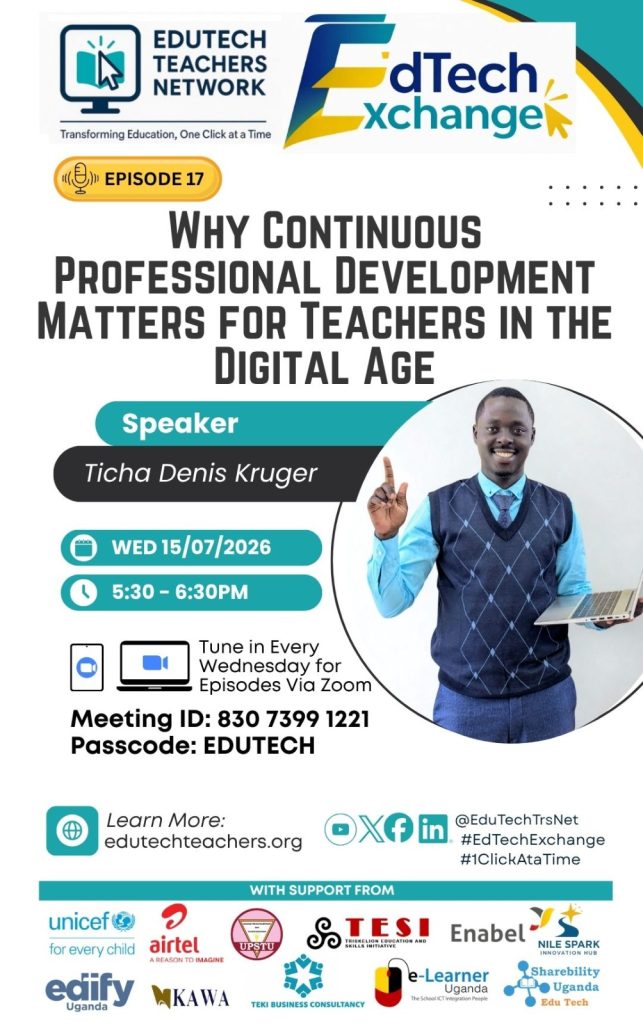
On Wednesday, 15th July 2026, I will be speaking at EdTech Exchange (Episode 17) hosted by the Edutech Teachers Network on the topic: “Why Continuous Professional Development Matters for Teachers in the Digital Age.” This article serves as a preview and deeper exploration of what we will cover, while also offering practical strategies every educator can implement immediately.
The Urgency of CPD in the Digital Age
The teaching profession has always demanded lifelong learning, but the pace of technological change has accelerated dramatically. Consider these realities:
- Rapid Technological Evolution: Tools like AI tutors, virtual reality simulations, and data-driven learning analytics emerge almost monthly. Teachers who do not continuously upskill risk becoming obsolete in their own classrooms.
- Changing Student Needs: Today’s learners are digital natives who expect personalized, interactive, and relevant education. Traditional lecture-based methods often fall short.
- Post-Pandemic Realities: The global shift to remote and hybrid learning exposed gaps in digital pedagogy for many educators. Those who adapted quickly thrived; others struggled.
- Professional Fulfillment and Retention: Teachers who engage in meaningful CPD report higher job satisfaction, better student outcomes, and lower burnout rates.
CPD is the bridge between where we are and the educators we aspire to become — competent, innovative, and impactful in a digital world.
What We Will Explore in the Webinar
During the live session (5:30 – 6:30 PM EAT), we will dive into:
- The Digital Transformation Imperative — How technology is changing the role of the teacher from “sage on the stage” to “guide on the side.”
- Barriers to Effective CPD — Time constraints, limited resources, digital overload, and institutional resistance — and how to overcome them.
- Evidence of Impact — Research-backed benefits of continuous learning on teaching efficacy and student achievement.
- Practical Frameworks — Models for personal and institutional CPD that work in resource-constrained environments like Uganda and similar contexts.
- Success Stories — Real examples from educators and global innovators who transformed their practice through deliberate professional growth.
- Actionable Roadmap — Immediate steps teachers can take to build a sustainable CPD habit.
The session will be interactive, with opportunities for questions and networking with fellow passionate educators.
Different Ways Teachers Can Grow Continuously
Effective CPD is not one-size-fits-all. Here are proven pathways that blend formal, informal, and technology-enhanced approaches:
#1. Structured Online Learning
- Platforms like Coursera, edX, FutureLearn, and UNESCO’s initiatives offer free or affordable courses on digital pedagogy, AI in education, and subject-specific tech integration.
- Local options: Partner programs with organizations like Edify Uganda, KAWA, Sharebility, ITAU(ICT Teachers Association of Uganda) or university extensions.
- Tip: Dedicate 30–60 minutes weekly to micro-credentials or bite-sized modules.
#2. Webinars, Podcasts & Virtual Communities
- Join series like EdTech Exchange every Wednesday.
- Participate in Twitter/X chats (#EdTechExchange, #1ClickAtATime), LinkedIn groups, or Facebook communities for Edutech Teachers Network.
- Listen to podcasts during commutes for passive learning.
#3. Professional Learning Communities (PLCs)
- Form or join school-based PLCs focused on specific tools (e.g., Google Workspace for Education, Microsoft Teams, or Canva for Education).
- Engage in peer observation and collaborative lesson planning.
#4. Self-Directed Learning & Reflection
- Maintain a teaching journal or digital portfolio reflecting on what worked, what didn’t, and why.
- Read books such as “The Innovator’s Mindset” by George Couros or “Teaching in the Fourth Industrial Revolution.”
- Experiment with one new tool per month and document results.
#5. Mentorship and Coaching
- Seek mentors or become one. Reverse mentoring (younger digital natives teaching veterans) can be powerful.
- Participate in programs offered by partners like UNICEF, TESI, or Nile Spark, EDIFY, Sharebility, ITAU
#6. Hands-On Technology Integration
- Start small: Use AI tools for lesson planning, gamification apps for engagement, or data analytics to track student progress.
- Create digital content (videos, interactive quizzes) and share it openly to build your personal brand as an educator.
#7. Formal Certifications & Advanced Study
- Pursue certifications in educational technology (e.g., Google Certified Educator, Microsoft Innovative Educator).
- Consider postgraduate diplomas or short courses in digital leadership.
#8. Action Research
- Identify a classroom challenge, implement a digital solution, measure impact, and share findings with colleagues.
Building a Sustainable CPD Habit
Success lies in consistency over intensity. Here’s a simple framework:
- Daily: 10–15 minutes of reading or tool exploration.
- Weekly: One webinar or community interaction.
- Monthly: Implement and reflect on one new practice.
- Quarterly: Review progress and set new goals.
Remember: Your growth directly multiplies your students’ opportunities.
Continuous Professional Development is an investment in yourself, your students, and the future of education in Africa and beyond. In the digital age, the best teachers are not those who know everything, but those who are committed to learning everything they need to serve their students better.
I invite you to join me live on July 15th for a dynamic conversation. Whether you are a classroom teacher, school leader, or education enthusiast, this session will equip you with insights and inspiration.
Register now via Zoom: Meeting ID: 830 7399 1221 Passcode: EDUTECH
Learn more about the Edutech Teachers Network at edutechteachers.org and follow the conversation using #EdTechExchange and #1ClickAtATime.
What is one area of digital professional growth you want to focus on this year? Share in the comments — let’s learn together.
About the Author Ticha Denis Kruger is an educator, edtech advocate, and speaker passionate about transforming education through technology.
With support from partners including UNICEF, Airtel, Edify Uganda, Sharebility and others — as featured in the EdTech Exchange series.