Reflections from the Uganda Professional Science Teachers’ Union ProDev Hour
On Thursday, 23 July 2026, from 8:00 p.m. to 9:00 p.m., I had the privilege of facilitating a ProDev Hour session organised by the Uganda Professional Science Teachers’ Union (UPSTU). Our discussion focused on a subject that is increasingly important to the quality and future of education: “Why Continuous Professional Development Matters for Science Teachers in the Digital Age.”

As an Education Officer and Edu-Tech Facilitator, my work involves helping educators and learners use technology meaningfully in their everyday teaching and learning activities. This experience has taught me that providing schools with digital devices or introducing teachers to new applications is not enough. Sustainable change occurs when educators are supported to keep learning, experimenting, reflecting and adapting their practice.
The ProDev Hour provided an important space in which science teachers could examine what professional growth means in a rapidly changing educational environment. It was not simply a presentation about digital tools. It was a conversation about the kind of science teacher today’s learner needs and the practical steps educators can take to remain effective, confident and relevant.
Beginning with the teachers’ voices
I used Mentimeter during the opening minutes to make the session participatory and to understand the teachers’ existing perceptions, needs and experiences. This was important because professional development should not begin with assumptions about teachers. It should begin by listening to them.
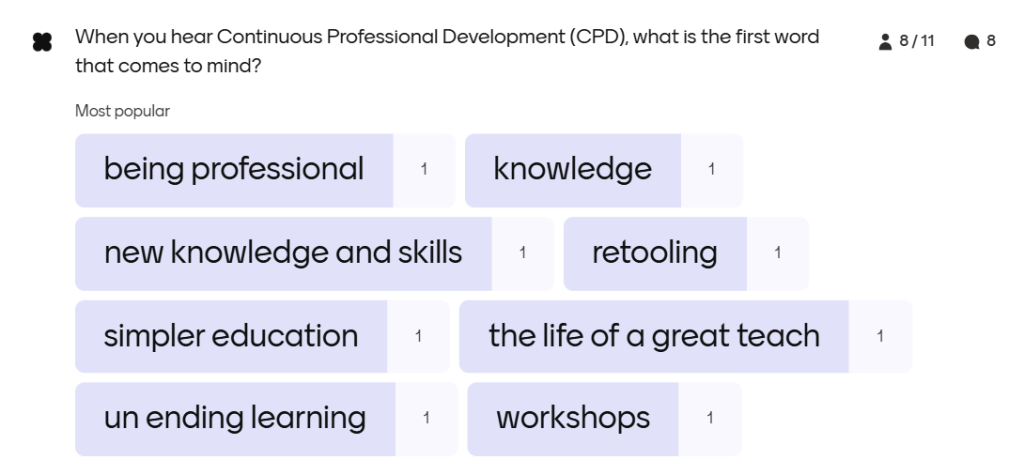
When participants were asked for the first word or phrase that came to mind when they heard “Continuous Professional Development,” their responses included “being professional,” “knowledge,” “new knowledge and skills,” “retooling,” “workshops,” and “unending learning.” One participant described CPD as “the life of a great teacher.”
These statements demonstrated that the participating teachers already understood CPD as more than attendance at a compulsory workshop. They associated it with acquiring knowledge, renewing professional skills and maintaining the qualities of a capable educator. The phrase “unending learning” was particularly significant because it captured the central message of the session: professional growth is not an event with a finishing point. It is an ongoing responsibility.
For science teachers, this responsibility is especially important. Scientific knowledge continues to develop, curriculum expectations change, new discoveries emerge and technologies create new ways of investigating and explaining scientific concepts. A teacher responsible for helping learners understand science must therefore remain a learner of science, pedagogy and technology.
From the traditional science teacher to the teacher needed today
One of the central comparisons in my presentation was between the traditional science teacher and the science teacher required in the digital age.
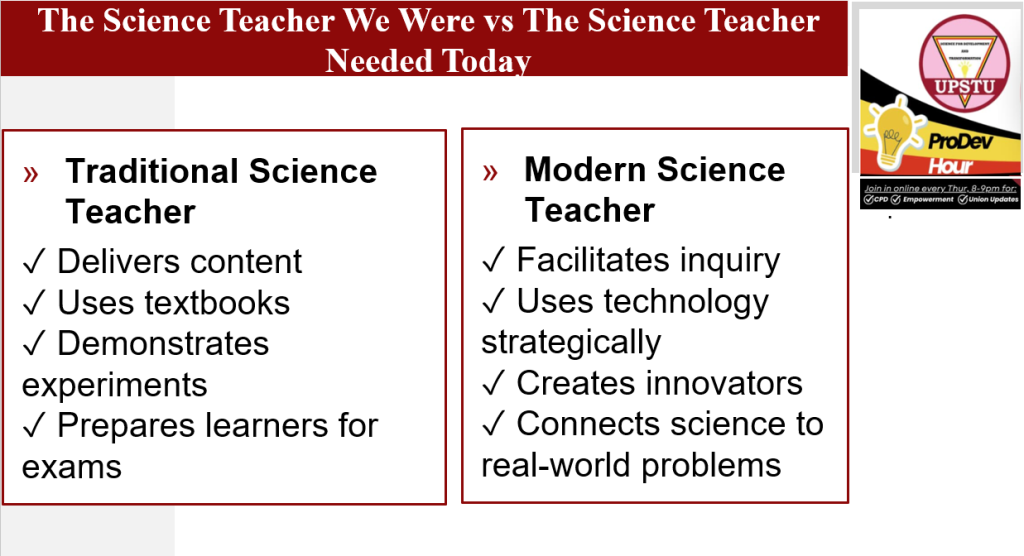
Traditionally, the teacher’s main responsibilities were understood as delivering content, using textbooks, demonstrating experiments and preparing learners for examinations. These responsibilities remain relevant, but they are no longer sufficient on their own.
The modern science teacher must also facilitate inquiry, use technology strategically, nurture innovators and connect scientific knowledge to real-world problems. Instead of being the only source of information in the classroom, the teacher increasingly becomes a guide who helps learners question, investigate, evaluate evidence and apply their knowledge.
This change does not diminish the teacher’s importance. In fact, it makes the teacher’s professional judgement even more important. Learners may be able to access information instantly through smartphones, websites, videos, social media and artificial-intelligence tools, but access to information is not the same as understanding. Learners still need a knowledgeable educator who can help them distinguish reliable evidence from misinformation, connect abstract concepts to practical experiences and use digital resources responsibly.
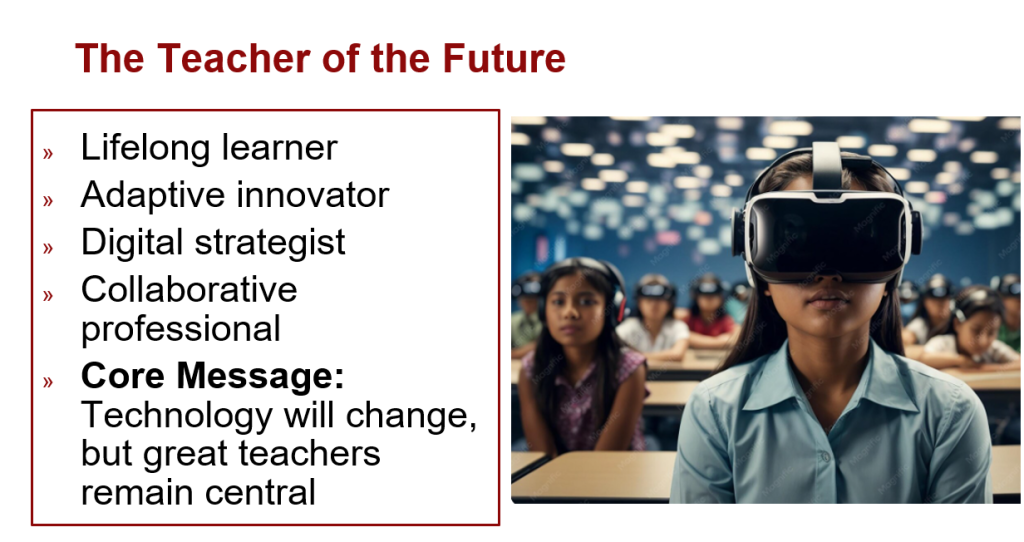
Technology will continue to change, but excellent teachers will remain central to meaningful learning.
What participating teachers wanted to improve
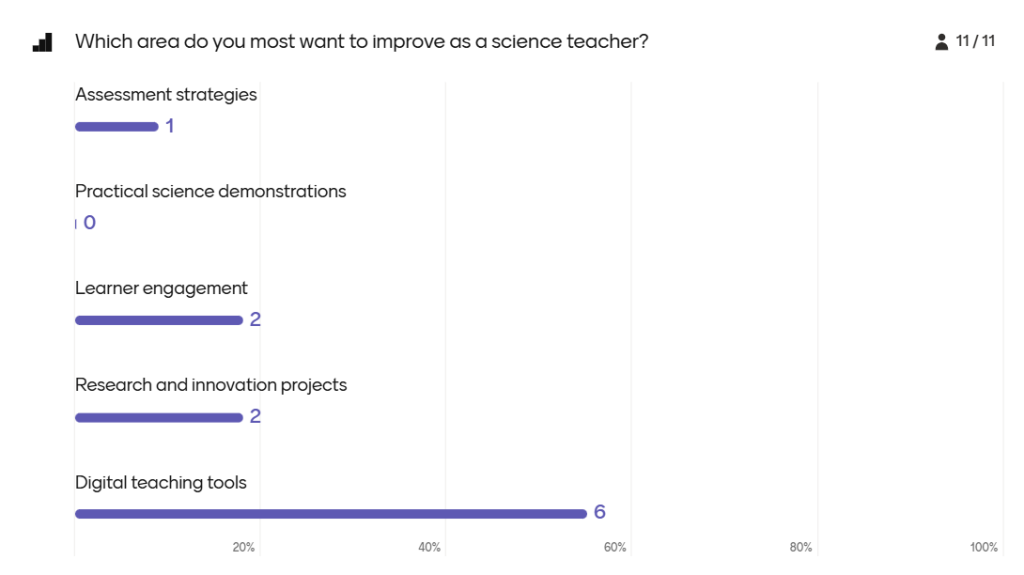
Another Mentimeter question asked participants which area they most wanted to improve as science teachers. Out of 11 responses, six teachers selected digital teaching tools, making this the most frequently chosen area. Two selected learner engagement, another two selected research and innovation projects, while one selected assessment strategies.
The result was revealing. Approximately 55 per cent of the participating teachers identified digital teaching tools as their leading professional-development priority. This suggests that teachers recognise the growing place of technology in education, but many still require structured opportunities to build the confidence and practical competence needed to use it effectively.
Digital integration should never mean using technology simply because it is fashionable or available. A digital tool is only valuable when it supports a clear learning purpose. It may help a teacher visualise an abstract concept, simulate an experiment that cannot safely be conducted in the school laboratory, collect evidence of learner understanding, encourage collaboration or provide timely feedback.
The professional-development challenge is therefore not only to show teachers more applications. It is to help them decide when, why and how a particular tool can improve learning.
Confidence in digital integration
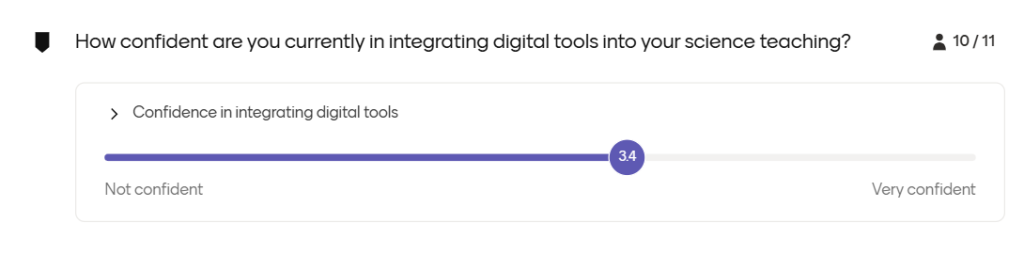
Participants were also asked to rate how confident they currently felt about integrating digital tools into science teaching. The average response was 3.4 on the session’s confidence scale.
This result reflected encouraging progress, but it also indicated room for growth. The teachers were not beginning from zero. Many already had some experience with digital platforms and recognised their educational value. However, confidence in technology is rarely built through a single demonstration. It develops through repeated practice, access to support and opportunities to apply tools in authentic classroom situations.
Teachers need safe professional spaces in which they can ask questions, make mistakes and learn from colleagues. They should be able to begin with one manageable tool, use it for a specific teaching purpose and reflect on its effect before moving to something more complex.
This is one reason CPD must be continuous. A single workshop may create awareness, but sustained learning develops competence. Repeated application, reflection and peer support turn knowledge into professional practice.
The barriers are real
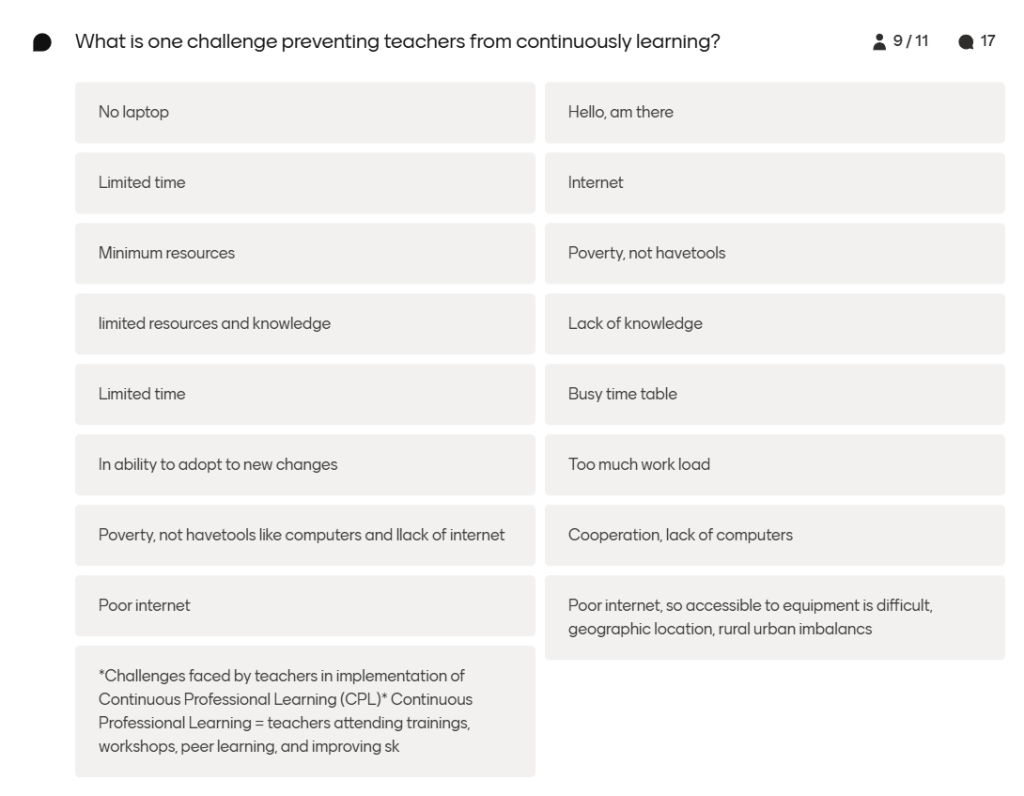
The Mentimeter responses also brought necessary realism to the discussion. When teachers were asked to identify one challenge preventing continuous learning, they mentioned limited time, heavy workloads, busy timetables, lack of computers, inadequate internet connectivity, poverty, limited resources, insufficient knowledge and difficulty adapting to change.
Some responses highlighted the combined effect of poor internet connectivity, limited access to equipment and geographical inequalities between rural and urban areas. These are not minor inconveniences. They shape whether a teacher can attend an online course, download resources, participate in a professional community or practise using a digital platform.
It would therefore be unfair to speak about teachers’ responsibility to develop professionally without acknowledging the conditions in which they work. Teachers need support from schools, professional associations, government agencies, education partners and their colleagues. Institutions can help by protecting time for professional learning, improving access to devices and connectivity, encouraging peer mentoring and recognising teachers who take initiative.
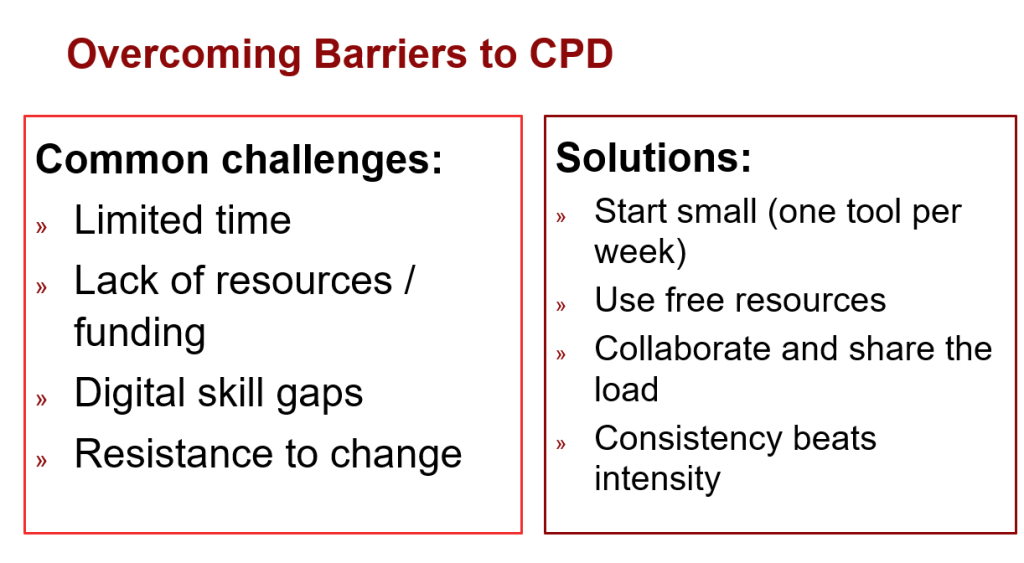
Nevertheless, limited resources should not lead us to believe that professional growth is impossible. CPD can begin with small, realistic actions: reading a professional article, discussing a lesson with a colleague, watching a short instructional video, joining a teacher community, reflecting on learner responses or experimenting with one new teaching strategy.
The key message I shared was that consistency beats intensity. Fifteen minutes of purposeful learning practised regularly can have a greater long-term impact than waiting indefinitely for the perfect workshop, device or funding opportunity.
The areas in which science teachers must keep growing
During the presentation, I highlighted several interconnected areas for professional development.
The first is digital literacy. Teachers need the ability to locate, evaluate, create and share digital information responsibly. This includes understanding online safety, copyright, data privacy and the responsible use of artificial intelligence.
The second is digital content creation. Science teachers can strengthen learning by producing or adapting presentations, videos, infographics, simulations and interactive materials. Multimedia can make complex processes more visible and can provide learners with opportunities to review difficult concepts at their own pace.
The third is technology-enhanced pedagogy. Teachers need to understand approaches such as blended learning, flipped learning, project-based learning and inquiry-based learning. Technology should support sound pedagogy rather than replace it.
The fourth is modern assessment. Online quizzes, digital portfolios and learning analytics can help teachers collect evidence of understanding and provide timely feedback. However, teachers must still interpret that evidence professionally and ensure that assessment supports genuine learning rather than merely producing scores.
Continuous development in these areas can improve lesson planning, learner engagement, practical activities, feedback and the ability to respond to diverse learning needs.
Making CPD practical and sustainable
Professional learning becomes sustainable when it is connected to teachers’ daily work. During the session, I proposed several practical strategies.
Teachers can establish or join professional learning communities within their schools, subject associations or online networks. Collaboration reduces professional isolation and allows teachers to share lesson ideas, resources and solutions to common challenges.
Online learning also provides access to webinars, short courses, certification programmes and micro-credentials. Where connectivity permits, these opportunities allow teachers to learn at their own pace and select content that responds to their immediate needs.
Equally important is a cycle of experimentation and reflection. A teacher can try a new tool or method, observe how learners respond, evaluate the outcome and make an adjustment. Keeping a simple teaching-reflection journal can make this process more deliberate and help the teacher recognise progress over time.
Teachers can also build a personal learning network by connecting with educators, professional associations and thought leaders through online communities and professional platforms. A strong network can provide encouragement, resources and opportunities that may not be available within one school.
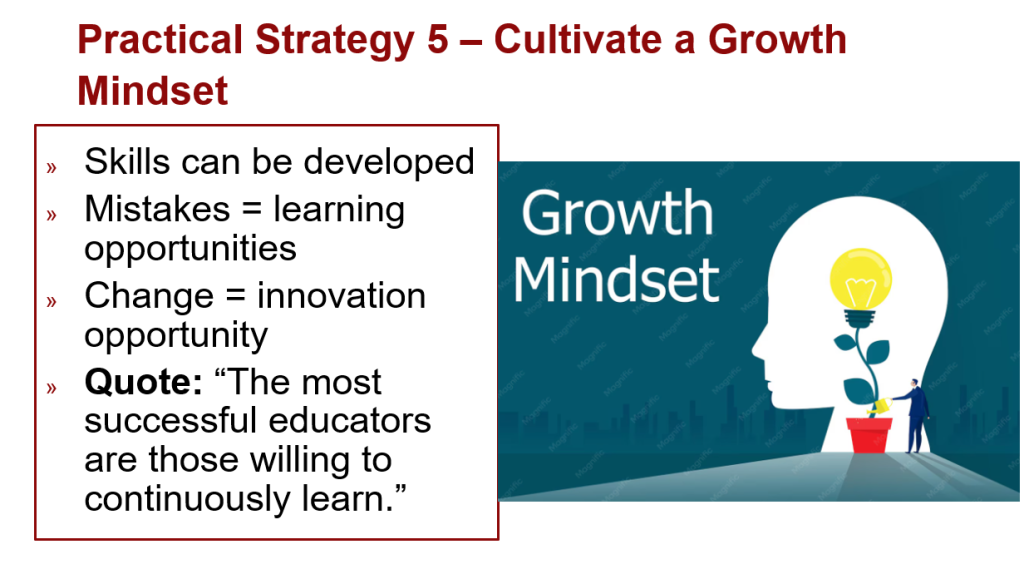
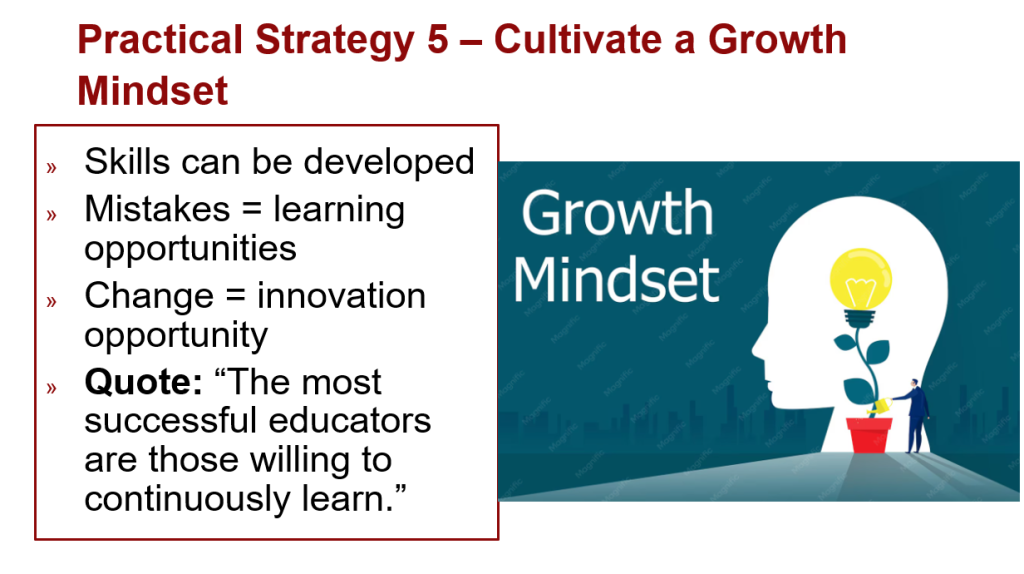
Above all, teachers need a growth mindset. Digital confidence is not a fixed quality that some people possess and others do not. Skills can be developed. Mistakes can become learning opportunities, and change can become an opportunity for innovation.
Ending the session with Kahoot
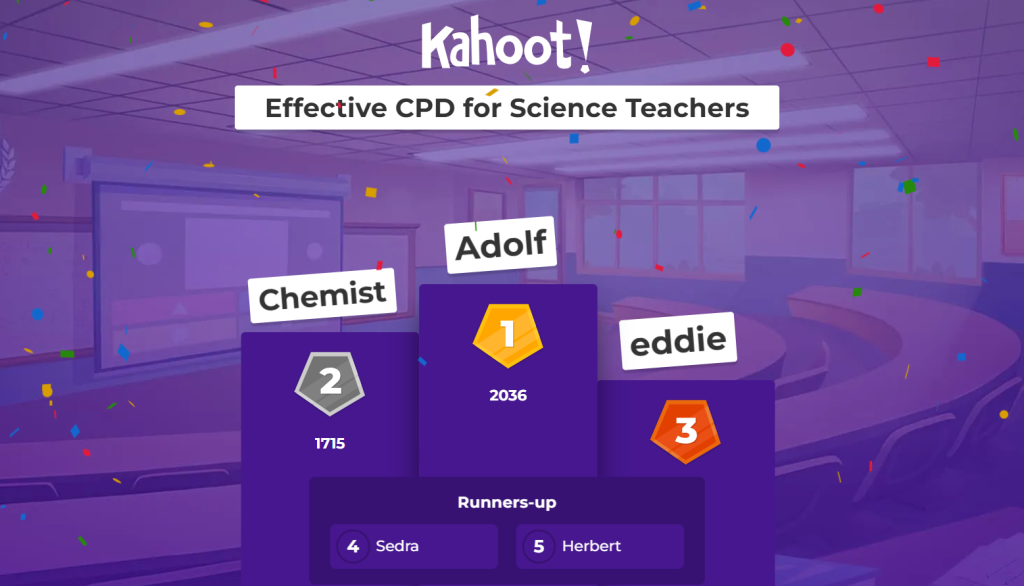
To conclude the ProDev Hour, I used Kahoot to review the major concepts from the presentation. The activity introduced an element of friendly competition while allowing participants to test their understanding and receive immediate feedback.
More importantly, it demonstrated one of the principles we had discussed throughout the session: digital tools are most effective when they serve a clear pedagogical purpose. In this case, Kahoot was not used simply for entertainment. It supported formative assessment, reinforced the main ideas and enabled participants to experience a tool they could adapt for their own science classrooms.
The participants’ engagement in the final activity showed the value of active learning. Teachers, like their learners, respond positively when learning includes participation, challenge, timely feedback and an opportunity to apply knowledge.
Small steps can produce a significant impact
One of my closing recommendations was a simple professional-learning rhythm: dedicate a few minutes each day to learning, participate in at least one professional interaction each week, and implement and reflect on one new practice each month.
These actions may appear small, but their cumulative effect can be significant. A teacher who learns and applies one useful practice every month will have introduced 12 meaningful improvements within a year. When teachers share those practices with colleagues, the effect extends beyond one classroom.
CPD should not be treated as an additional burden placed on already busy teachers. It should be understood as part of professional practice and as an investment in teacher confidence, learner achievement and the future of education.
Looking towards the teacher of the future
The teacher of the future will be a lifelong learner, an adaptive innovator, a digital strategist and a collaborative professional. This teacher will not attempt to compete with technology. Instead, the teacher will use professional knowledge and judgement to ensure that technology supports human learning.
For science education, the opportunity is particularly exciting. Digital simulations, virtual laboratories, interactive assessments, multimedia resources and online collaboration can extend learning beyond the limitations of a traditional classroom. Yet these opportunities can only produce meaningful results when teachers are adequately prepared and supported.
My invitation to every teacher at the end of the ProDev Hour was to commit to one area of professional growth during the term. It could be improving digital assessment, designing more inquiry-based lessons, learning one new platform, joining a professional community or beginning a reflection journal.
The important step is to begin and then to remain consistent.
Download full presentation here:
A final reflection
I am grateful to the Uganda Professional Science Teachers’ Union for the opportunity to contribute to ProDev Hour and to every science teacher who participated, shared an experience, responded to the Mentimeter questions and took part in the Kahoot activity.
The honesty of the participants’ responses reminded me that educators are willing to grow, but that their professional-development experiences must be relevant, accessible and responsive to real classroom conditions.
If we want learners who are curious, adaptable and prepared to solve emerging problems, we must support teachers to demonstrate those same qualities. Continuous Professional Development is therefore not optional in the digital age. It is one of the foundations of effective teaching and educational transformation.
A science teacher who continues learning does more than update personal skills. That teacher expands what is possible for every learner in the classroom.
Technology will change, but great teachers will remain central. Let us ensure that those teachers are continually learning, confidently adapting and professionally supported.
About the author: Ticha Denis Kruger is an Education Officer and Edu-Tech Facilitator who supports educators and learners to integrate technology meaningfully into everyday teaching and learning.