


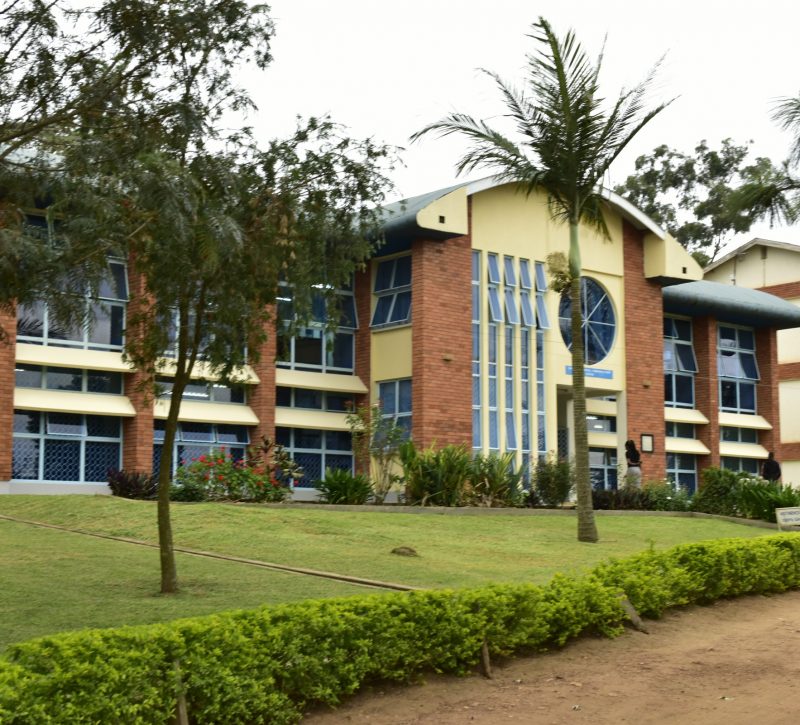
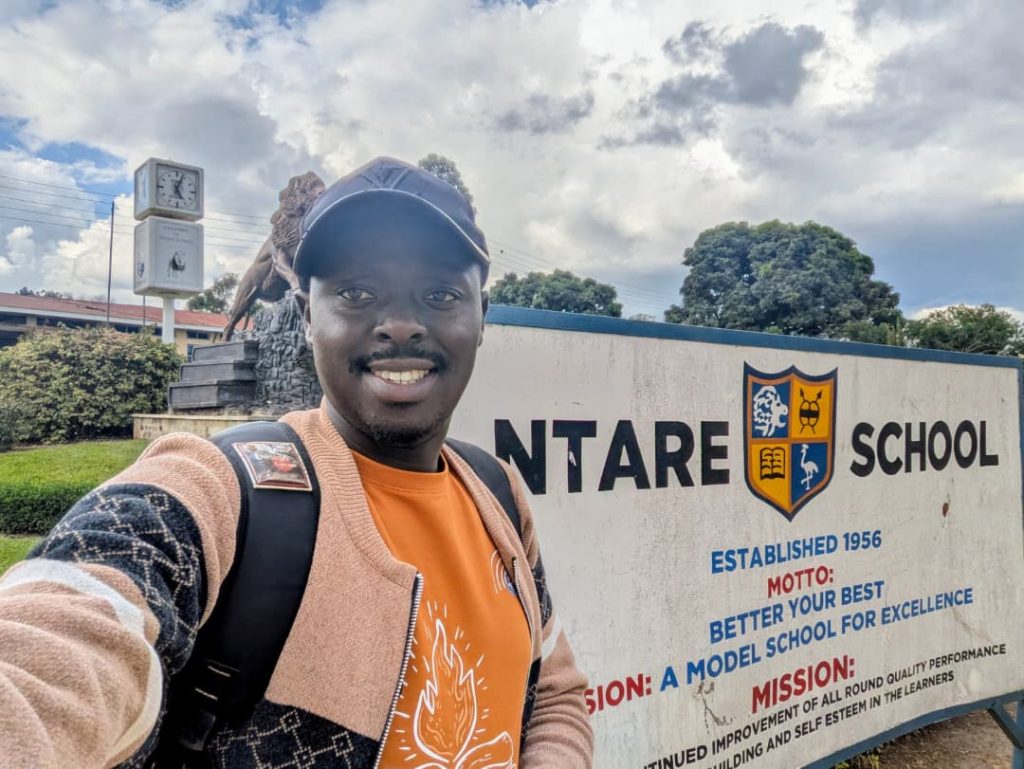
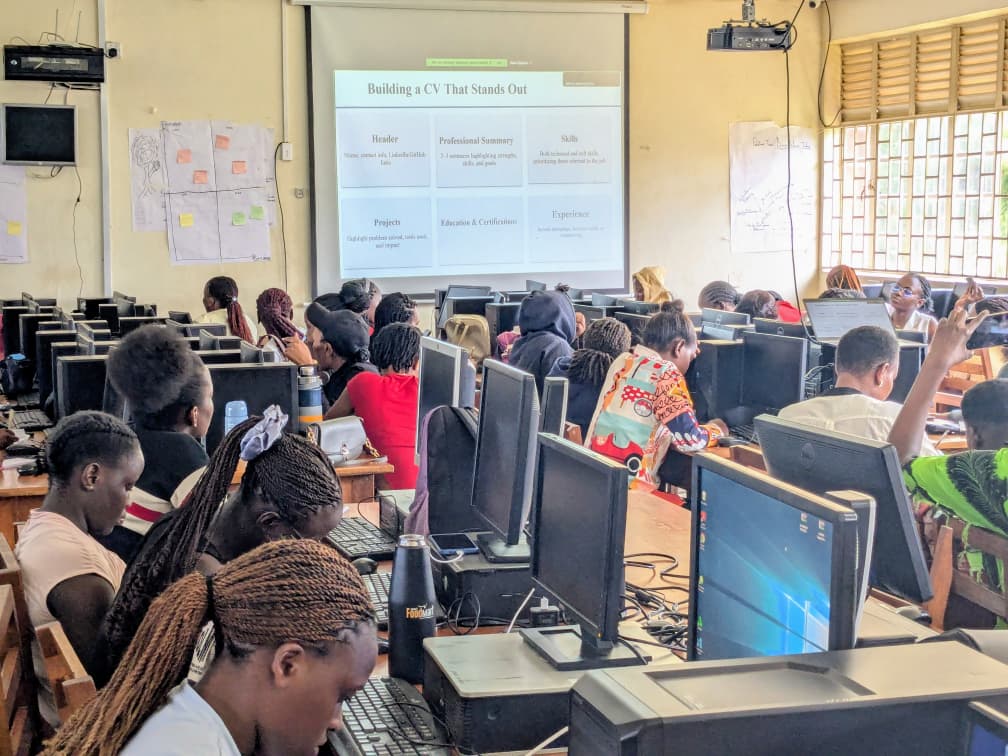
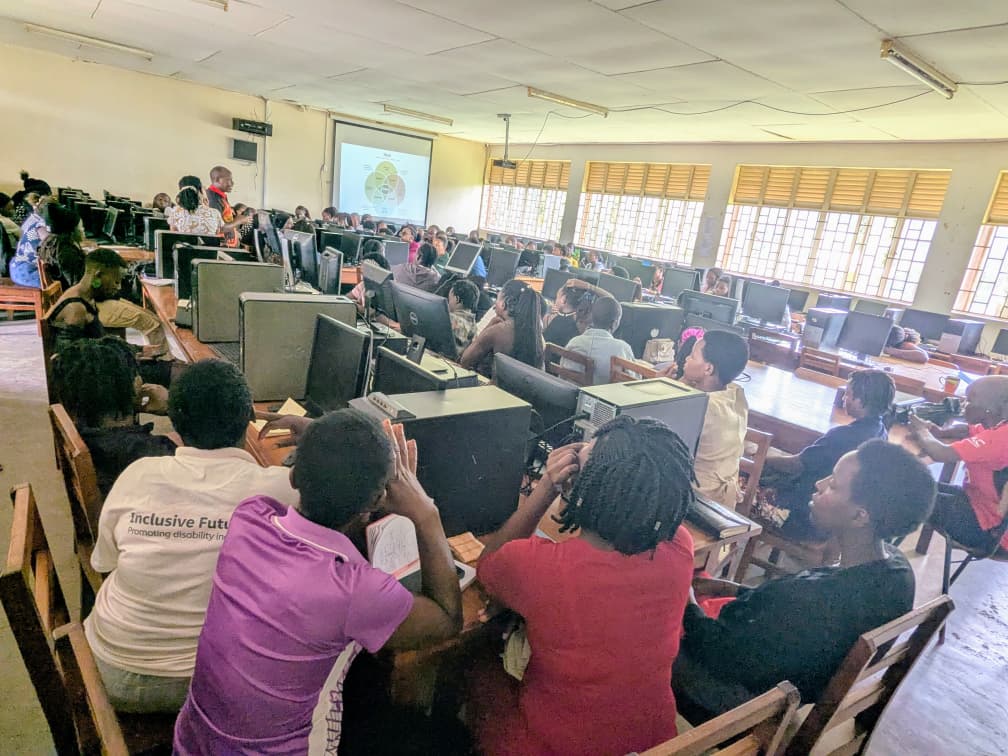
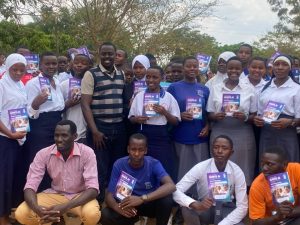
Over the past three weeks, I have had the privilege of facilitating a Foundation of Software Development training at Ntare School – Mbarara, focused on equipping young women with practical web development skills.
The opportunity for these young women to participate in the Foundation of Software Development training was made possible through the 10X Program, a fully funded digital skills initiative implemented by Refactory Academy in partnership with the Mastercard Foundation, Outbox Uganda, UNCDF, and WITU. The 10X Program is specifically designed to equip young women aged 18–35 across Uganda with practical digital skills and connect them to meaningful work opportunities in the digital economy. By removing financial barriers, the program provides free access to high-quality training in areas such as web development, product design, and software development. It places a strong emphasis on inclusion, actively supporting unemployed women, persons with disabilities, refugees, and individuals from diverse educational backgrounds. Through this initiative, the participants at Ntare School were able to gain valuable technical and professional skills that would otherwise have been out of reach, highlighting the critical role such programs play in expanding opportunities for young women in tech.
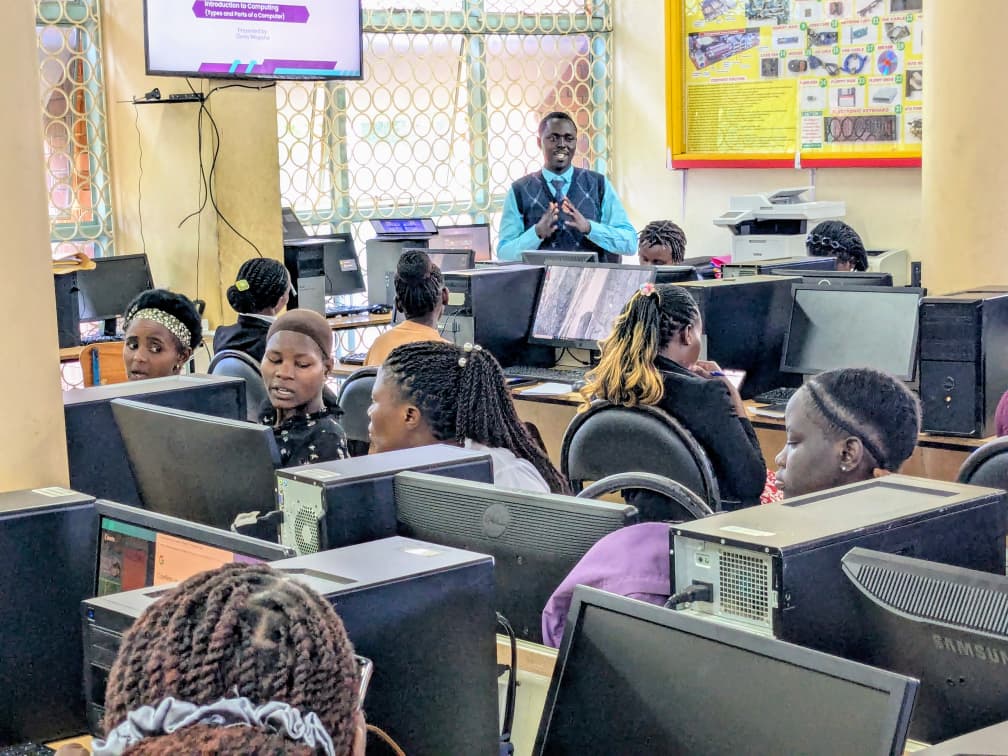
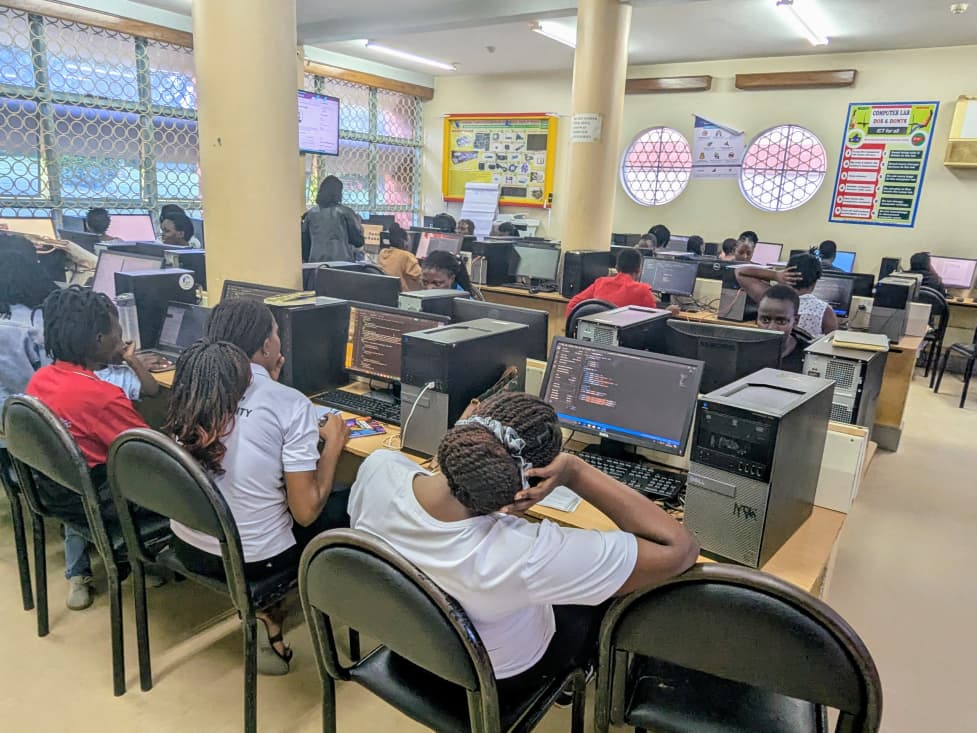
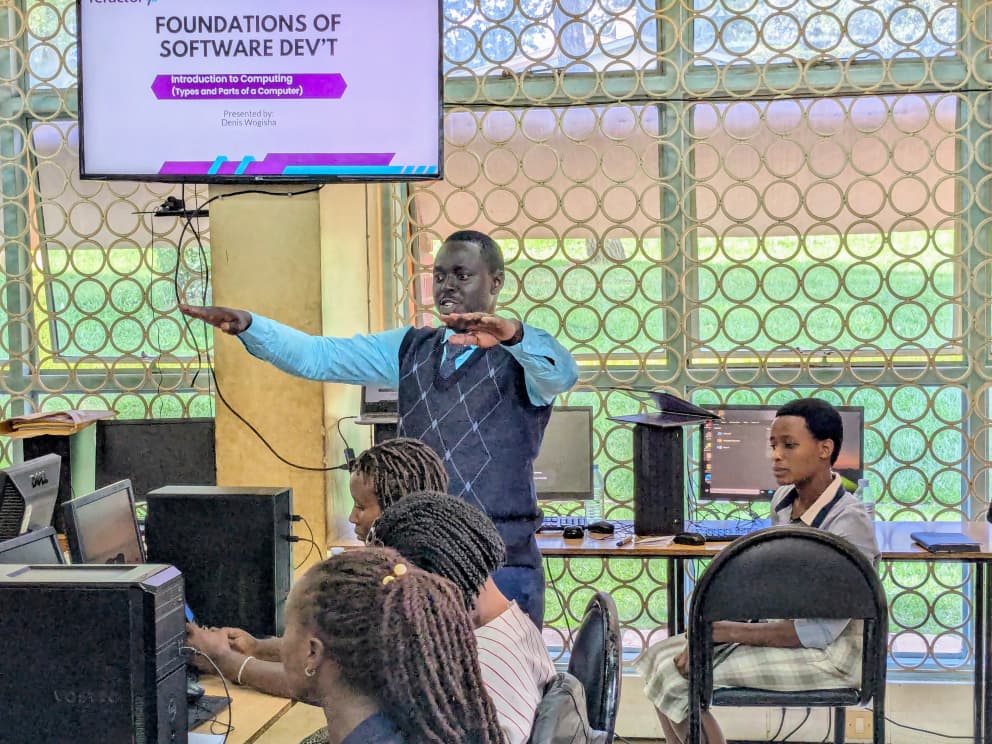
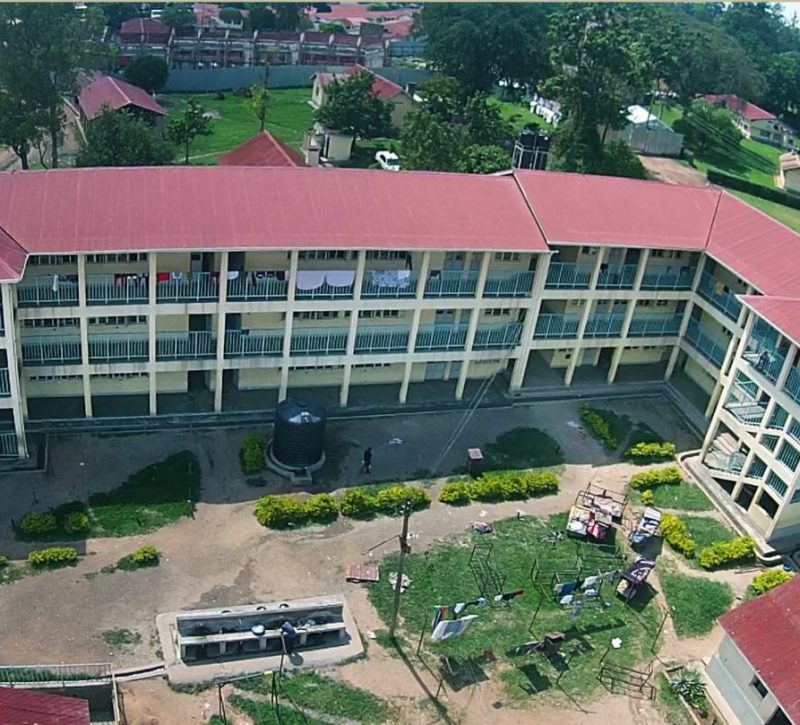
I would like to extend my sincere gratitude to the administration of Ntare School for graciously hosting the three-week Foundation of Software Development workshop. Their support in providing the necessary space, resources, and conducive learning environment played a vital role in the smooth and successful delivery of the training. The school’s commitment to creating opportunities for young women to acquire digital skills is truly commendable and reflects a forward-thinking approach to education. I am deeply appreciative of the cooperation, flexibility, and encouragement received from the school leadership and staff throughout the program.
What the Participants Learned
The three-week training combined technical web development skills with essential soft skills. Here’s a breakdown of what was covered:
Week 1: Foundations
- Life skills and personal development
- Problem-solving using Human-Centred Design
- Introduction to computing and digital tools
Week 2: Web Development
- HTML5 and CSS3 fundamentals
- Building personal and multi-page websites
- Introduction to freelancing and professionalism
Week 3: Tools & Projects
- Content Management Systems (WordPress, Webflow, Wix)
- Project development and technical coaching
- Work-readiness training
What has been most inspiring is seeing the transition from beginners to confident creators. These young women have not only learned how to code but have also successfully deployed their projects live on the internet using Netlify.
“Everyone should learn how to program a computer because it teaches you how to think.” — Steve Jobs
The training adopted a learner-centered approach, placing the young women at the center of the learning process. Rather than relying on traditional lecture-based instruction, the sessions were designed to be highly interactive, practical, and supportive. A project-based learning methodology was used, where participants learned HTML5 and CSS3 by immediately applying concepts to build real websites from the very first week. Learning was scaffolded — starting with foundational concepts and gradually increasing in complexity as the learners gained confidence. Hands-on practice, paired with guided exercises and real-time feedback, allowed participants to learn by doing. Collaborative learning was also encouraged through peer discussions and troubleshooting sessions, fostering a supportive environment where the ladies could learn from one another. This approach not only helped them develop strong technical skills in web development but also built their confidence, problem-solving abilities, and independence as emerging developers.
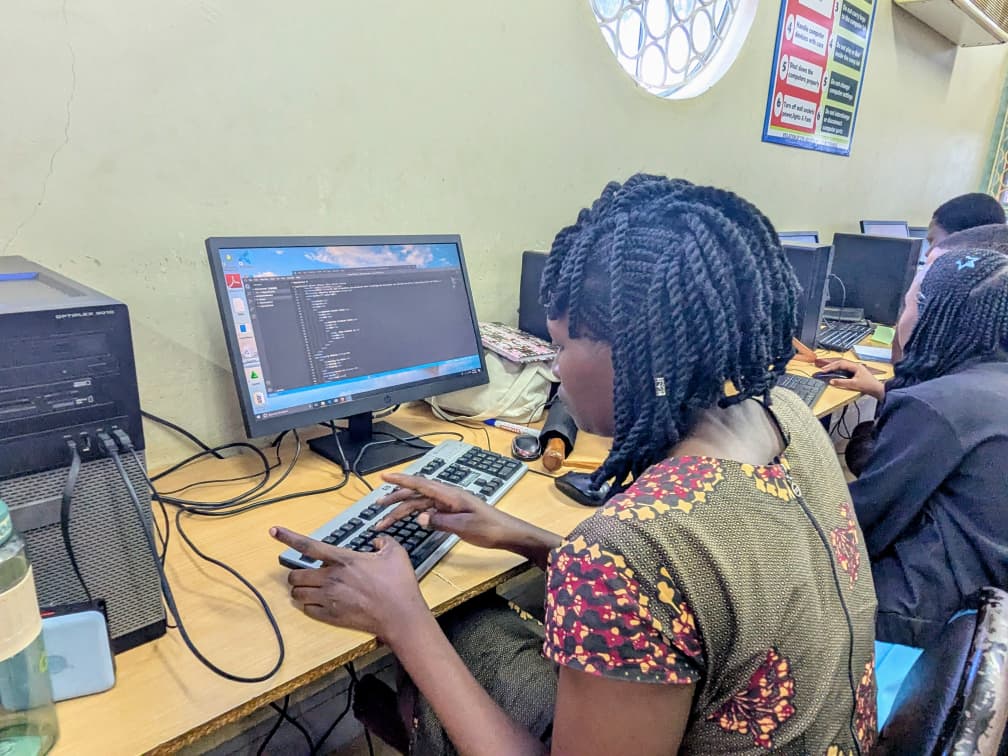
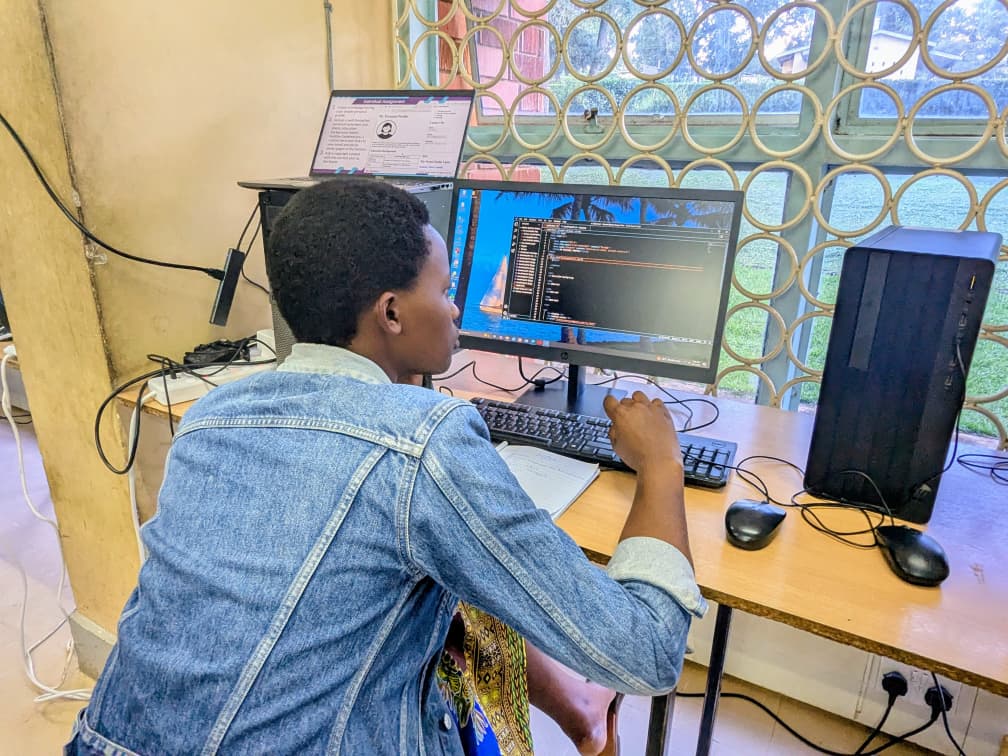
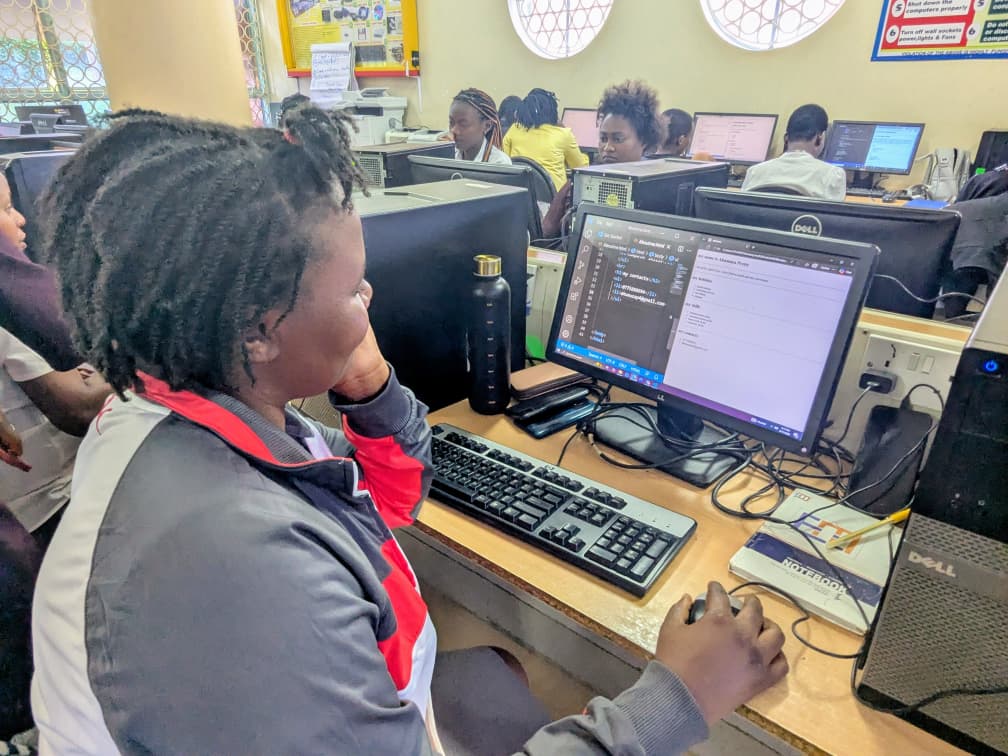
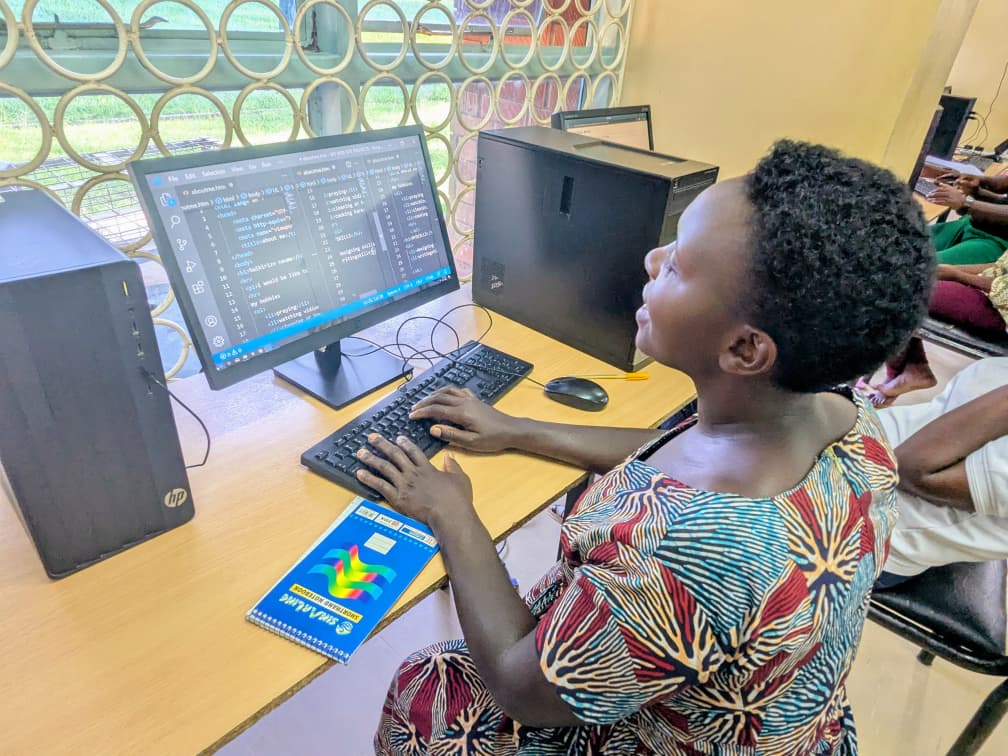
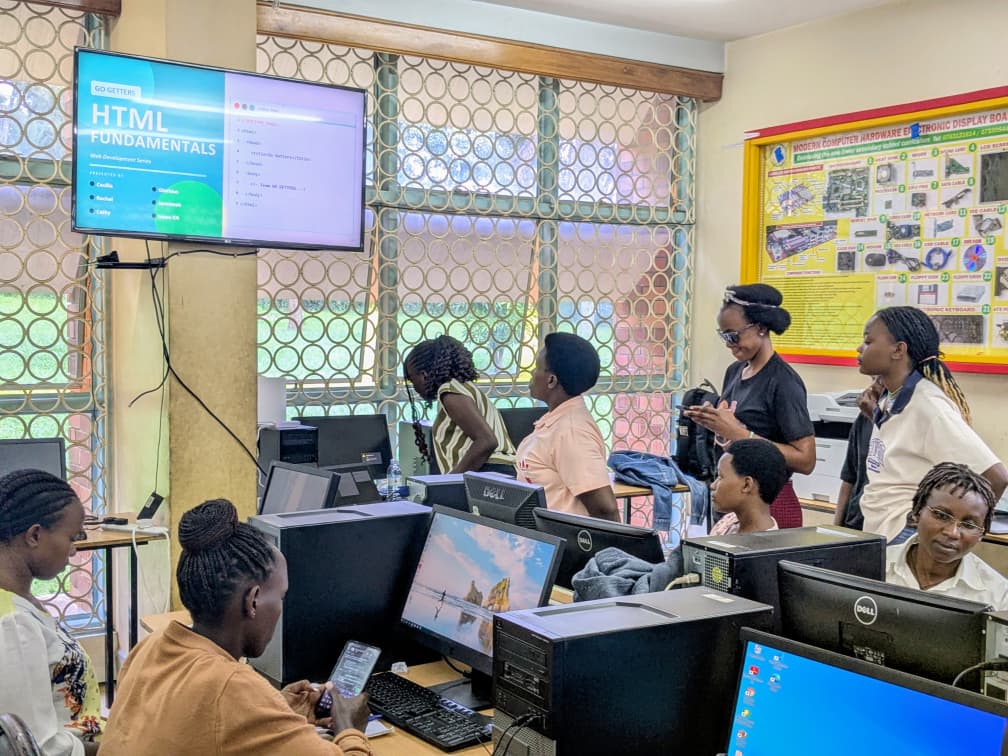
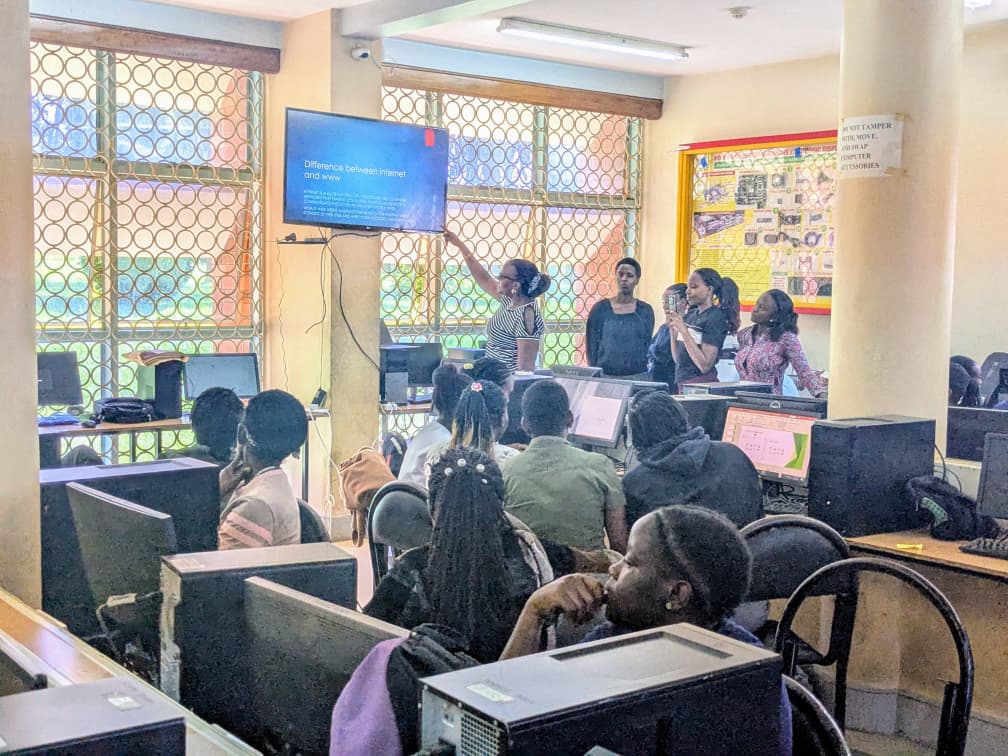
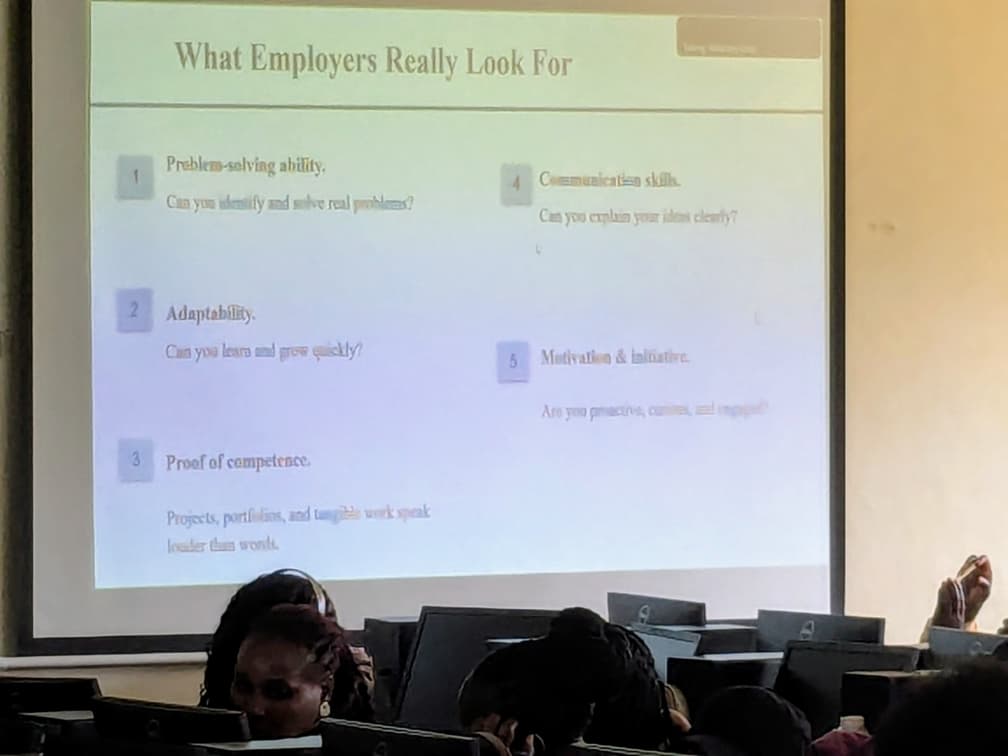
Beyond the technical training in HTML5 and CSS3, participants were also equipped with essential non-technical skills designed to prepare them for both professional and personal success. The program included dedicated sessions on life skills and personal development, covering goal setting, public speaking, effective communication, personality awareness, and teamwork. Participants also engaged in problem-solving workshops using Human-Centred Design principles, learning how to identify real community challenges and develop digital solutions to address them. In addition, the training introduced them to freelancing and business fundamentals, including how to identify problems worth solving, navigate freelance platforms, price their services appropriately, and maintain professionalism in client delivery. A strong emphasis was also placed on work-readiness training, helping the young women build the confidence, mindset, and practical competencies needed to transition into tech-related opportunities or further studies. This holistic approach ensured that participants did not only gain coding skills but also developed the soft skills and entrepreneurial mindset necessary to thrive in today’s digital economy.
Websites Built by the Participants
Here are some of the amazing websites created and hosted by the ladies during the training:
- Martha Adongo – https://marthaadongo.netlify.app/
- Jermimah – https://jermi.netlify.app/
- Atherine – https://atherine.netlify.app/
- Irawo – https://irawo.netlify.app/contact
- Asiimwe Colette – https://asiimwecolette.netlify.app/
- Nahwera Patience – https://nahwerapatience.netlify.app/
- Akiteng Deborah – https://akitengdeborah.netlify.app/
- Jermi Gold – https://jermigold.netlify.app/
- Kwarisiima Benia – https://kwarisiimabenia.netlify.app/
- Nahwera Mackline – https://nahweramackline.netlify.app/
- Nagaba Angel – https://nagabaangel.netlify.app/
- Ainembabazi Prima – https://ainembabaziprima.netlify.app/
- Nabimanya Racheal – https://nabimanyarachealt.netlify.app/
- Twikirize Naume – https://twikirizenaume.netlify.app/
- Atukunda Shivan – https://atukundashivan.netlify.app/
- Oliver Kasande – https://oliverkasande.netlify.app/
- Namakura – https://namakura.netlify.app
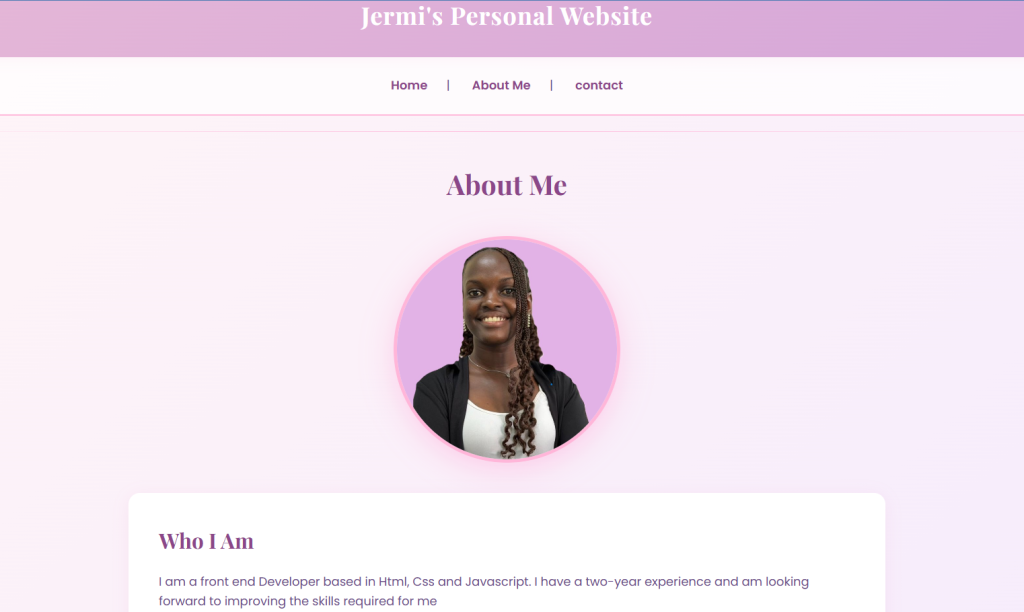
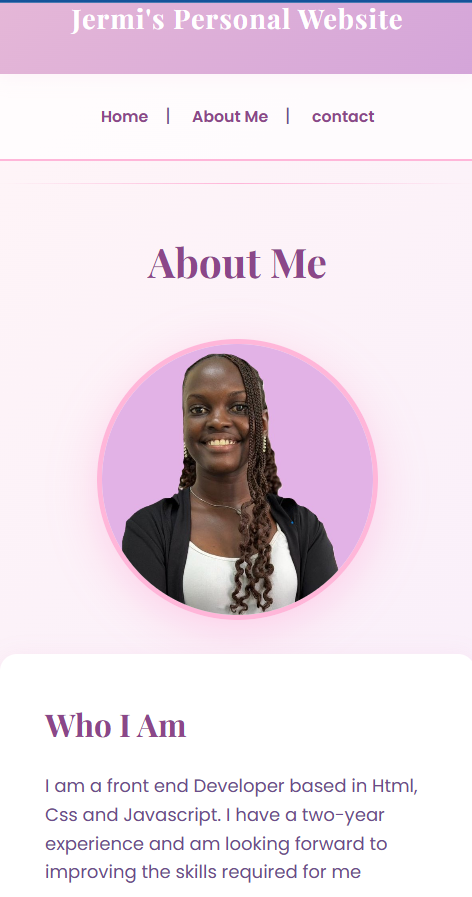
These projects are a testament to their creativity, dedication, and growing technical skills.
The feedback from the participants has been overwhelmingly positive. Many of the young women expressed that the training not only equipped them with practical web development skills in HTML5 and CSS3 but also significantly boosted their confidence in using technology. Several shared how the hands-on approach helped them overcome their initial fears of coding, while others highlighted how the sessions on freelancing and problem-solving opened their eyes to new opportunities. Overall, the ladies described the experience as transformative, noting that they now feel more empowered to pursue further learning and even explore tech-related opportunities in the future.
Training, facilitation and website development
Has helped me acquire website design and development skills with html and css and how to plan the work flow in terms of website content.

Website Development Training
It has provided me knowledge about computer usage, coding via HTML 5, CSS 3 and so many more beneficiaries
Web Development Training
I have learnt alot from your lectures more especially about computer usage, HTML and CSS. Really appreciative ticha Denis.
Website development.
Your services made me understand how coding works, before taking your classes, I knew nothing about HTML and CSS but now, it’s different. Thanks for helping me build my own website and making me realise that a computer is not only for Microsoft word, excel, power point an database plus watching movies. Thanks for the patience and emphasis on writing efficient code, you made me to start thinking like a developer and change careers.

Gratitude to Refactory Uganda
This training was made possible through my engagement as a consultant with Refactory Uganda, who hired me to support this cohort of young women.
Refactory Uganda is doing remarkable work in building Uganda’s tech talent pipeline. They run high-quality software engineering training programs, prepare young people for careers in technology, and partner with organizations to deliver practical, industry-relevant skills. Their commitment to creating opportunities for young Africans in tech continues to inspire many of us in the ecosystem.
I’m truly grateful for the opportunity to contribute to this initiative and for the trust they placed in me to deliver this training.
Understanding Netlify and GitHub
For those following this journey or interested in learning how to host their own projects, here’s a quick background:
Netlify is a modern web hosting platform that makes it incredibly easy to deploy static websites (HTML, CSS, and JavaScript). With just a few clicks, developers can take a project from their computer and make it live on the internet with free SSL, fast global delivery, and continuous deployment. It’s especially popular among beginners and frontend developers because of its simplicity.
GitHub, on the other hand, is a platform used for version control and collaboration. It allows developers to save different versions of their code, work together with others, and track changes over time. Many developers use GitHub together with Netlify — they push their code to GitHub, and Netlify automatically deploys it live.
Learning these two tools is a major step for anyone starting in web development, as they form part of the modern workflow used by professional developers worldwide.
Looking Ahead
This three-week training has shown what is possible when young women are given access to quality, hands-on digital skills training. The confidence, creativity, and technical growth I’ve witnessed have been truly encouraging.
I remain committed to creating more opportunities for young people — especially women — to gain practical tech skills that can open doors to employment, entrepreneurship, and further learning.
If you are a school, organization, or institution looking to run similar web development training programs for students or young women, I would be glad to discuss how we can collaborate.


(15) Comments
“Wow, Oliver! The portfolio looks incredibly clean and professional. I love the dark-mode aesthetic clarity and how you showcased your frontend and automation skills. The layout is sleek, modern, and super easy to navigate.
Engineered with precision indeed! 🚀 Great work!”
I have gained a lot from this study and am so grateful for ticha Denis’ great work to help us enhance our skills in software development. Looking forward to learning more.
Thanks Martha for the feedback. It was great supporting you all.
I take this opportunity to thank you our teacher we are so much appreciable to you for your time dedicated to us while teaching us how to code using Html and Css and also WordPress,, am so much humbled for the skills you built in me ,, l can now build a website and my own project,,, we thank you so so much may God bless you abundantly 🙏
Thank you so much for this insightful article. I truly appreciate your guidance and the way you make learning easier and inspiring for us. I am also grateful that my project was featured, and I sincerely value your continuous support throughout the learning process.
It has been an incredible and educative period ever since we came together as a class at Ntare School. You have Indeed produced strong and energetic roots in us and we really appreciate ticha Denis. Thanks for the positive attitude towards our journey teamwork Indeed existed. For the wrong in terms of negativity you came across from us we are really sorry. Looking forward to air out the information u passed us onto us.
Best regards
Resty nabaweesi.
I would like to sincerely appreciate our tutor for the excellent coaching and guidance throughout these three weeks under Refactory training. Your way of teaching HTML5 and CSS3 has made learning web development easier, interesting, and practical for us. We have gained valuable skills in structuring webpages, designing responsive layouts, and understanding the fundamentals of modern web design. Thank you for your patience, dedication, and continuous support during the training. Your efforts have greatly inspired and motivated us to keep improving our skills in technology and web development.
Thank you
I take this moment to extend my sincere thanx to refactory for the opportunity given to young ladies to learn digital skills, I also thanx the 10x programme for the scholarship that was given to us. I thank Ntare school for hosting us and making us feel at home. Lastly I thank our tutor Ticha Denis Kruger for the dedication and time he put in to equip all of us young ladies with all the practical skills that we greatly needed. “You are indeed a great educator “.
Thank you
I would like to send my sincere gratitude to the 10x program: Inclusively equipping young women in advanced digital skills and connecting them to dignified work and most especially to our dear instructor Ticha Denis, your great commitment, guidance, support and knowledge has helped me grow my skills.I’m really grateful for the opportunity and everything I have learned from u. We keep praying for the blessings, thankyou 🙏
I want to take this opportunity to thank Refactory and 10x programme for the scholorship.In these three weeks we have learnt alot be HTML,CSS ,Problem solving,Work readiness etc.This has helped us to acquire skills in website designing,web pages,styling to improve our livelihood incomes via technology.
I want to thank Ticha Denis you have been a mentor,a tutor ,inspiration to us.Some of us came with no knowledge about computer but your mentoring turned us to web developers ,having courage to enter the tech industry with armour.Thank you sir.
The Truth is that Learning HTML5 and CSS3 with Ticha Denis has been an interesting journey. He teaches with all his heart, gives each student time, the explanations alone don’t leave u the same.
After a good number of years, i have come to love, understand and implement my skills and knowledge from HTML and CSS with Ticha Denis for these three weeks at Refactory.
Big up to you Sir💯
Thank you for teaching us the foundations of software development, web development, the tools we need, and how to build real projects. You believed in each one of us, even when we doubted ourselves.
You did not give up on us when the code broke, when we were confused, or when progress felt slow. You stayed patient and pushed us forward.
Because of these skills, our future will not remain the same. We now have tools to build, to earn, and to create opportunities for ourselves and for others.
You didn’t just teach us how to code. You taught us how to keep going.
May God bless you abundantly for the seeds you’ve planted in all of us.
Thank you so much, Ticha Denis, for this amazing training.
These 3 weeks have meant a lot to me. Building my personal website http://www.cecilia.site.ug from scratch with HTML5 & CSS3 made me feel proud of myself in a way I never expected. I came in nervous and unsure, but your patience and encouragement helped me gain confidence and believe I can do this.
Seeing my own website come to life was honestly emotional. Your efforts in getting my website hosted online with a personal domain left a long lasting impact and a forever memory!
The article captured the whole journey perfectly, and I’m so grateful for the opportunity, the support, and the skills I will carry forward.
Everyone deserves a Ticha Denis in their lives!
My journey with you has been a wonderful one and inspirational. Being able to know how coding works was a great opportunity in in life. Your patience taught me to be calm and patient during this course as far as creating a website is concerned. Being able to see my website come to life encouraged me that I can do more far better tech related activities. Thank-you Mr. Denis.
Before joining ,I wanted to quit cause I thought the concept was impossible to get but with ticha Denis Wogisha ,he went step by step and now I have the confidence to say am a web developer.
He is a teacher every student deserves.
If I possible I could choose him over and over again.
He is a great man